Sustainable Finance Emerges as a Key Investment Priority Across Africa
Across Africa’s financial landscape, capital is increasingly being judged not only by returns, but by resilience, governments, and development institutions are now paying closer attention to how money flows into projects that can withstand climate shocks, energy transitions, and long-term pressures.
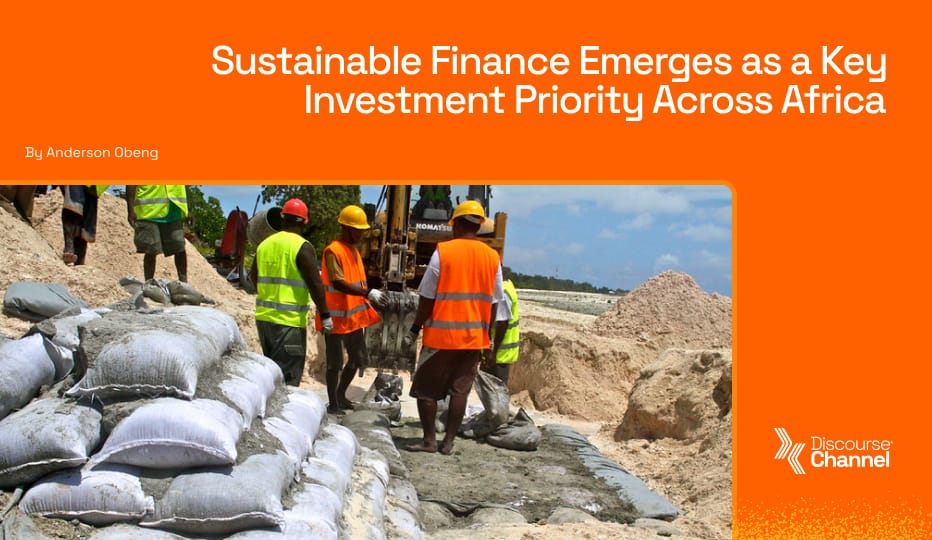
Across Africa’s financial landscape, capital is increasingly being judged not only by returns, but by resilience. Investors, governments, and development institutions are now paying closer attention to how money flows into projects that can withstand climate shocks, energy transitions, and long-term environmental pressures. That shift is accelerating sustainable finance into one of the continent’s most active investment frontiers.
Sustainable finance gained significant traction this week as green finance, climate-linked investments, and sustainable infrastructure funding continued to attract growing attention from governments and financial institutions across Africa.
The focus is increasingly shifting toward how to mobilise private-sector capital at scale to fund energy transition projects, climate adaptation systems, and long-term resilience infrastructure. Rather than relying solely on public funding or development assistance, policymakers are exploring blended finance models, risk-sharing mechanisms, and investment frameworks designed to make climate-related projects more attractive to institutional investors.
A central driver of this momentum is the rising cost of climate impacts across the continent. Africa continues to face increasing exposure to droughts, floods, heat stress, and other climate-related disruptions, which place additional pressure on national budgets and economic stability. As a result, climate adaptation is no longer being treated as a long-term environmental goal alone, but as an immediate economic necessity.
Governments and financial institutions are also expanding discussions around the structure of Africa’s sustainable finance ecosystem. This includes the development of green bonds, climate investment funds, ESG-aligned financing tools, and policies aimed at improving transparency and investor confidence in climate-related projects.
At the same time, there is growing recognition that Africa’s climate financing needs are closely tied to global equity discussions. Policymakers across the continent continue to emphasize that Africa contributes a relatively small share of global emissions, yet faces some of the most severe consequences of climate change. This imbalance has intensified calls for increased international climate finance and more accessible funding mechanisms for adaptation and resilience projects.
The growing emphasis on sustainable finance also reflects a broader shift in Africa’s investment priorities, where infrastructure development is increasingly being evaluated through both economic and environmental lenses. Energy systems, transport networks, agriculture, and urban development projects are now being designed with long-term sustainability and climate resilience in mind.
What we are watching:
- Climate financing remained a major topic of discussion this week as African policymakers, development institutions, and sustainability experts continued to push for increased investment in climate resilience, renewable energy, and adaptation projects.
Sustainable finance is increasingly moving from a niche investment category to a central pillar of Africa’s economic strategy. As climate risks intensify and infrastructure demands grow, the ability to mobilise large-scale, long-term capital will play a critical role in shaping the continent’s development path.
The direction of travel is becoming clearer: Africa’s financial systems are being reshaped to integrate climate resilience, environmental responsibility, and investment scalability into core economic planning rather than treating them as separate policy areas.