Is that Freedom of Speech or Defamation?
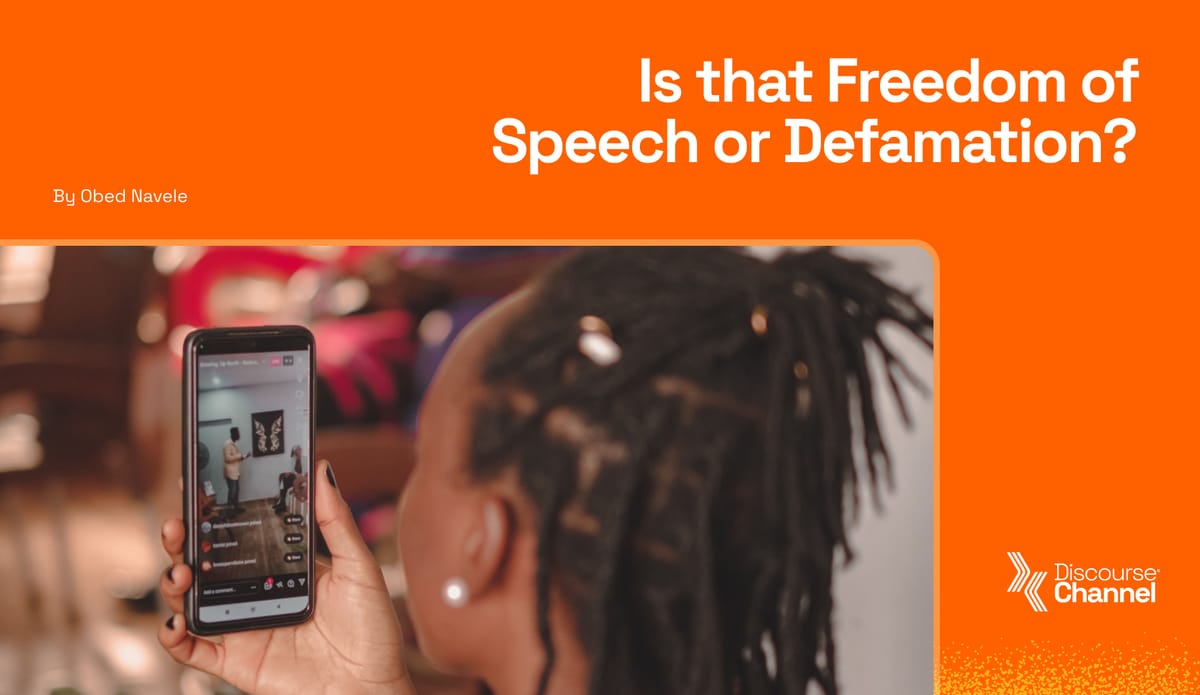
A phone, an unverified claim, and an audience running into the millions is now, on its own, enough to get someone arrested anywhere on the continent. The continent's content creator economy has grown from a novelty into an information infrastructure in under a decade, and with that growth has come a parallel rise in defamation suits, platform bans, and arrests tied to online statements. The two trends are not coincidental. A media environment built to reward attention rather than accuracy was always going to produce both influence and liability at scale, and Africa's legal systems, built for a slower media era, are still deciding how to respond to either. The past two years have produced enough of these cases across enough countries that they no longer read as isolated incidents. They read as a pattern, and the pattern is worth laying out plainly before asking what it actually means.
The files, country by country
Ghana. In July 2026, TikTok creator Camilla Alhassan was sentenced to a year in prison with hard labor after pleading guilty to offensive conduct over videos claiming, without evidence, that President John Dramani Mahama had buried thirty-two cows in a ritual to win the 2024 election. Weeks earlier, another creator, Mahama Aminat, was arrested by a police cyber-enforcement unit over videos alleged to insult and threaten the president and First Lady; she was granted bail on condition of surrendering her passport. In April, comedian Juiscy Vibez was arrested, denied bail, then remanded, over a movie-promotion video read as defamatory toward the president; she later apologized publicly, insisting the remarks were never aimed at him. A pastor was separately arrested that same month over an alleged death threat against the vice president made in a viral video.
Uganda. In 2024, a twenty-four-year-old TikToker, Edward Awebwa, was sentenced to six years for insulting President Yoweri Museveni, First Lady Janet Museveni, and their son, military chief Muhoozi Kainerugaba; the magistrate said the sentence was meant to teach him to "respect the person of the president." A twenty-year-old student, Edison Ssemugenyi, drew six months for falsely claiming the president was bedridden. Years earlier, academic Stella Nyanzi was jailed over a Facebook post calling Museveni "a pair of buttocks" while criticizing his government's failure to provide sanitary products for schoolgirls, and writer Kakwenza Rukirabashaija fled the country after a similar charge, alleging torture in detention.
Nigeria. Publisher and activist Omoyele Sowore have been repeatedly rearranged on cybercrime charges over posts describing President Bola Tinubu as a "criminal." The 2024 amendment to Nigeria's Cybercrime Act criminalizes online messages sent to cause "annoyance," "insult," or "needless anxiety" wording vague enough that the Socio-Economic Rights and Accountability Project has sued the federal government at the ECOWAS Community Court, and Nigeria's own National Human Rights Commission has warned the law "has potentials for abuse" against ordinary social media users, bloggers, and journalists.
Tanzania. Political rallies were banned ahead of protests against a disputed election and the detention of an opposition leader, with authorities citing the risk of unrest mobilized through social media a case less about individual insult prosecutions than about a government moving pre-emptively against the platforms themselves.
For all the stories that have been stated and even more that can still be tracked, this has been the recent trends in the digital age. Most people argue that it is their right to speak freely, others also say it is defamation, which is against the law and disrespect to the individuals involved.
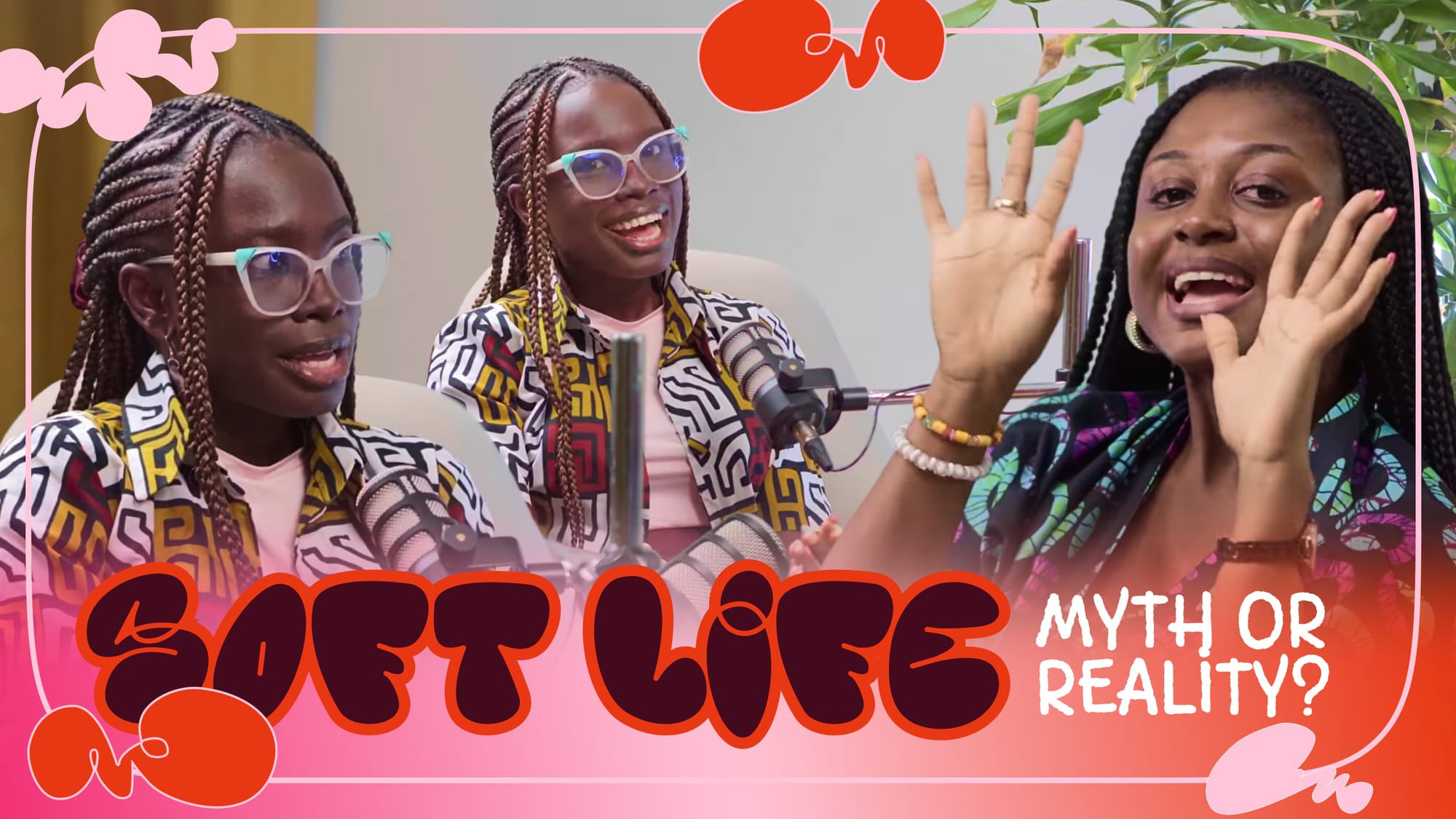
Behind every 'soft life' post lies a story of sacrifice, self-discovery, and the courage to defy expectations.
Two readings of the same shape
Lay these cases side by side and two arguments emerge. The free-speech reading treats criticism of a sitting head of state, however crude, as exactly what expression protections exist to cover the theory that the people most in need of protection from an insult law are precisely those the powerful find most insulting. Nyanzi's case is the cleanest test of this: there was no fabricated fact anywhere in her post, only an accurate grievance delivered in vulgar language, and a jail term followed anyway. Sowore's "criminal" was a stated opinion about a president's conduct that the state chose to prosecute as an insult. On this reading, a statute broad enough to criminalize both of those alongside an actual fabricated claim is not really a defamation law. It is a law protecting incumbency, and the fact that Ghana's Criminal Offences Act and Uganda's Computer Misuse Act can each be pointed at a lie and an accurate insult with equal ease is itself the structural problem, not an unfortunate side effect of it.
The defamation and misinformation reading starts from a different part of the same file and does not require taking any government's motives at face value to hold. A named public figure was accused of a specific, criminal-adjacent act of ritual killing tied to an election with no evidence offered, and the claim did not stay contained to entertainment; it circulated at a scale and speed no correction could match. Platforms reward emotional intensity over accuracy by design, which means the creator who fabricates the sharper claim has a direct financial incentive to keep making it, and an audience with no visible way to tell a verified claim from an invented one has no defense against that incentive except whatever the law supplies afterward. On this reading, the removal of an editorial gatekeeper did not remove the need for one; it only removed the party who used to carry the legal risk when a claim turned out to be false.
What the file actually shows
Both readings are true of different cases in the same file, which is what makes treating this as a single continental story misleading. Alhassan's ritual claim was demonstrably fabricated, and she admitted as much. Nyanzi's insult contained no fabrication at all. Sowore's charge criminalized an opinion. Awebwa's six-year sentence was handed down for vulgarity toward a family, explicitly to teach him respect, not for a lie the court had separately established. A single doctrine of free speech versus defamation cannot honestly hold all four outcomes, because they are not four instances of one problem. They are three or four different problems, each being adjudicated with the same borrowed vocabulary of "insult" and "false information," and in every case it is the same state cyber-enforcement apparatus deciding, by choosing whom to arrest, which problem a given claim gets filed under before any court weighs the evidence.
Digital literacy campaigns and platform fact-checking partnerships the remedies usually proposed for the misinformation half of this do nothing for Nyanzi's or Sowore's half of the file. Tighter defamation enforcement does nothing for Alhassan's. Whether any of these prosecutions actually protects a reputation, chills a legitimate dissent, or does some unmeasured amount of both is not something the file resolves on its own. It only makes clear who is doing the resolving, case by case, before the rest of the continent gets to read the verdict and decide for itself which kind of speech it has just watched get punished.
Attention as Currency, and Its Cost
Social platform algorithms reward engagement, and engagement correlates more reliably with emotional intensity than with accuracy. A measured, well-sourced critique of a policy decision competes for attention against a personal attack on the official who made it, and the personal attack typically wins on reach even when it loses on merit. This is not a uniquely African dynamic; it is the incentive structure of the platforms themselves but its consequences land differently in media environments where independent fact-checking infrastructure is thin and legal literacy about defamation is low. A creator chasing the algorithm's reward has a direct financial incentive to escalate sharper claims, more personal framing, less verification, because the version of a story that generates outrage generates revenue, and the version that generates a correction usually does not.
Where Accountability Ends and Overreach Begins
The line between holding power accountable and causing reputational harm is genuinely difficult to draw, and African governments have not always drawn it in good faith. In several recent cases creators detained or prosecuted for criticizing sitting officials, platforms restricted during periods of political tension illustrate a pattern where defamation and cybercrime statutes, often vaguely worded, have been used less to protect individuals from false claims than to suppress commentary that is uncomfortable rather than untrue. A legal framework that cannot distinguish a false personal attack from an accurate but unflattering statement about a public official is not protecting reputation; it is protecting incumbency. The debate over content creator responsibility cannot be resolved by expanding state power to police speech, because the same statute used against a creator who fabricates a claim can just as easily be used against a creator who simply reports one truthfully.
Virality's Bill Comes Due
The individual cost of chasing virality without verification has become concrete rather than hypothetical. Creators across the continent have faced defamation judgments, account suspensions, and in some cases criminal charges after statements made for engagement turned out to be false or unverifiable. Beyond the individual cases, the aggregate effect is a slow erosion of trust in digital media, generally audiences who have been misled by a creator once become skeptical of creators as a category, which damages the credible commentators alongside the reckless ones. Virality that is not backed by accuracy is, in this sense, a liability the entire creator economy carries collectively, not just the individual account that generates it.
Misinformation's Widening Reach
The consequences of unverified content extend well past reputational disputes between individuals. False claims about vaccine safety circulating on social media have measurably slowed uptake during past African health campaigns. Unverified allegations timed to election periods have driven real-world unrest in more than one recent African election cycle, arriving faster than official fact-checking bodies could respond. Rumour-driven bank runs and business boycotts, sparked by unverified claims shared at scale, have caused documented financial damage to companies with no mechanism to correct the record before harm was done. Misinformation in this environment is not a reputational inconvenience; it is a public-health, electoral, and economic risk multiplier, and it moves at a speed no regulatory or fact-checking body on the continent currently matches.
Building a Responsible Creator Economy
The realistic path forward does not run through criminal statutes broad enough to silence legitimate criticism, nor through leaving the current incentive structure entirely unchecked. It runs through digital literacy programmers that teach audiences to interrogate a claim regardless of who is making it, platform-level fact-checking partnerships adapted to local languages and contexts rather than imported wholesale, and industry-driven codes of conduct that let established creators set verification standards for the field before governments impose cruder ones. Some African fact-checking organizations have already begun partnering directly with creators rather than only critiquing them after the fact, a model that treats influence as a resource to be professionalised rather than a threat to be policed. Africa's digital storytellers have earned real cultural and political power in less than a decade. Whether that power matures into a trusted institution or continues to invite legal crackdowns and public backlash will depend on whether the creator economy builds its own standard of responsibility before one is imposed on it from outside.
Digital Assets Summit Africa
Theme: From Policy to Prosperity: Scaling Digital Assets for Investment, Jobs & Economic Growth
16th - 17th Sept, 2026 | Kempinski Hotel, Accra, Ghana