Home Again: The Long Road Back for Ghanaians Evacuated from South Africa
Ghana’s evacuation exercise for citizens affected by xenophobic violence in South Africa has come to an end. Coordinated by the Ministry of Foreign Affairs in collaboration with South African authorities and diplomatic missions
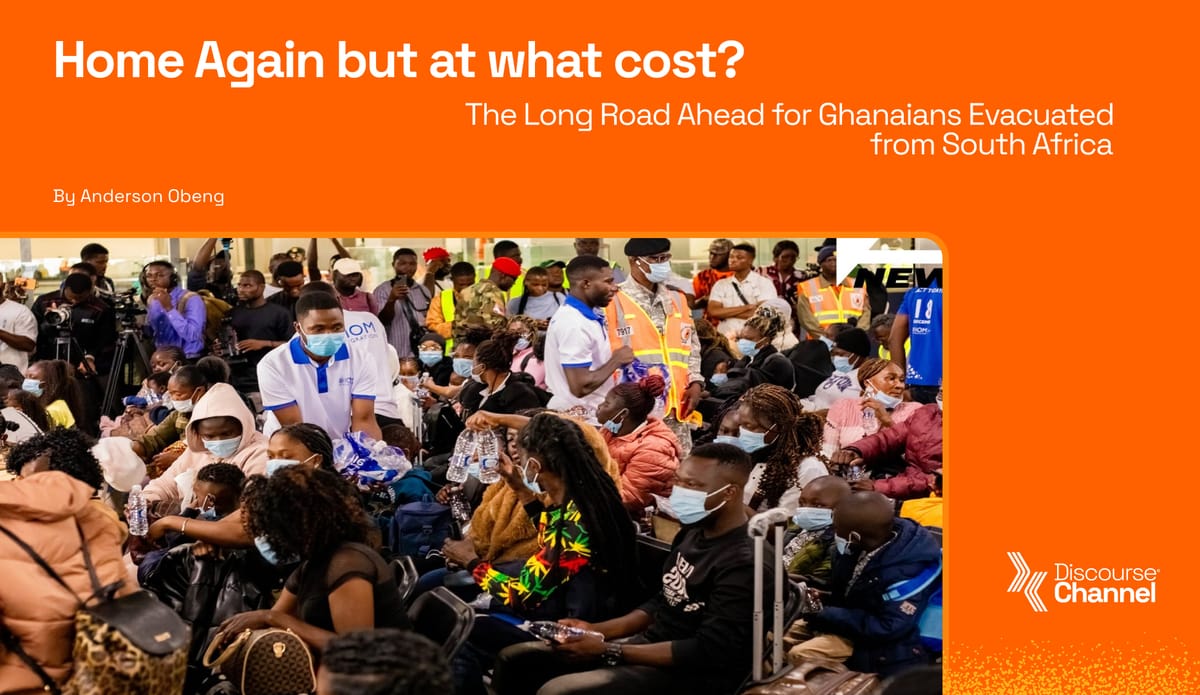
Ghana’s evacuation exercise for citizens affected by xenophobic violence in South Africa has come to an end. Coordinated by the Ministry of Foreign Affairs in collaboration with South African authorities and diplomatic missions, the operation was aimed at ensuring the safe return of Ghanaians whose security and livelihoods had come under threat.
But while the evacuation itself has been completed, the challenge facing many returnees is only beginning. For those who spent years building lives and businesses abroad, returning home represents not simply a homecoming, but the start of rebuilding what was lost.
Lives Interrupted
Many of the returnees had lived in South Africa for years and, in some cases, decades. They worked in retail, services, and small businesses that supported families both in South Africa and back home in Ghana.
The violence that triggered the evacuation disrupted those lives overnight. Businesses were abandoned, assets were lost, and years of financial investment were suddenly placed at risk. Beyond material losses, returnees now face the challenge of adjusting to a new reality in which familiar sources of income and stability have disappeared.
The Economic Ripple Effect
The effects of the displacement extend beyond those who returned. For many households in Ghana, remittances from relatives abroad have long provided support for education, healthcare, housing, and everyday expenses.
The interruption of those income flows has placed additional pressure on families already navigating difficult economic conditions. The crisis has therefore exposed how migration functions as an important economic link between households across borders and how quickly that support system can be disrupted.
Reintegration at Home
Attention has now shifted from evacuation to reintegration. Ghanaian authorities have announced support measures, including social assistance, psychosocial services, and efforts to connect returnees with employment opportunities.
Yet the challenge goes beyond emergency support. Many of those returning are experienced entrepreneurs and skilled workers. Their reintegration raises an important question: should returnees be viewed only as beneficiaries of assistance, or also as a form of diaspora capital capable of contributing to economic development?
How Ghana answers that question may determine whether the crisis becomes an additional burden on the labour market or an opportunity to harness skills and experience acquired abroad.
From Rescue to Redress
The crisis has also taken on a diplomatic and legal dimension. Ghana’s Ministry of Foreign Affairs has indicated that the government intends to pursue international legal avenues over losses of Ghanaians suffered by affected citizens, including plans to file a case before the International Criminal Court.
The move signals an effort to move beyond emergency evacuation and toward questions of accountability and compensation. For many affected Ghanaians, years of investment and livelihoods were lost, raising broader questions about the obligations of states to protect foreign nationals and the mechanisms available when migrant communities suffer violence.
A Test for African Integration
Continental frameworks such as the African Continental Free Trade Area and African Union protocols encourage mobility and economic cooperation. Yet periodic outbreaks of xenophobic violence continue to expose the vulnerability of migrant communities and the absence of stronger mechanisms for protection.
If labour mobility is to remain central to Africa’s integration agenda, the safety and rights of migrant workers cannot be treated as secondary concerns.
Beyond the Airport
The evacuation marked the end of an emergency operation, but not the end of the crisis. For many returnees, rebuilding livelihoods will take far longer than the journey home itself.
More broadly, the episode raises questions about migration, economic resilience, and the protection of Africans living and working across the continent. As regional integration deepens, ensuring that mobility is matched by safety and accountability may become just as important as promoting movement itself.