Africa’s Next Investment Frontier: What the London-Africa Business Summit Signals for the Continent
For decades, Africa has often been discussed through the language of aid, debt relief, and development assistance. International conversations involving the continent frequently focused on poverty reduction, governance reforms, and humanitarian challenges, reinforcing the perception of Africa as...
For decades, Africa has often been discussed through the language of aid, debt relief, and development assistance. International conversations involving the continent frequently focused on poverty reduction, governance reforms, and humanitarian challenges, reinforcing the perception of Africa as a recipient of external support rather than an active participant in global growth.
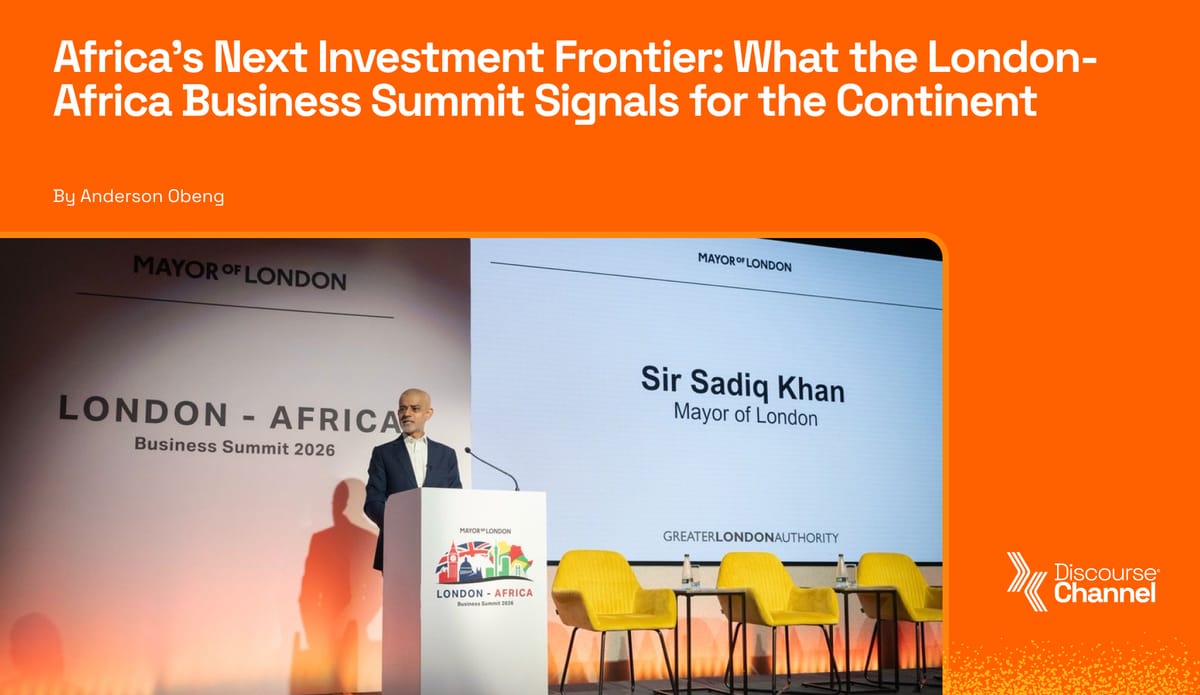
Yet the conversations emerging from the London-Africa Business Summit suggest that this narrative may be changing.
Bringing together policymakers, investors, entrepreneurs, and business leaders from Africa and the United Kingdom, the summit focused on opportunities in sectors ranging from technology and infrastructure to healthcare, renewable energy, and the creative economy. More importantly, the discussions reflected an emphasis on investment, innovation, and long-term partnerships rather than traditional development assistance.
The shift is significant. It signals growing recognition that Africa’s future may be defined not only by its challenges but also by its economic potential. With a rapidly growing population, increasing urbanisation, and expanding digital adoption, the continent is increasingly attracting attention from investors seeking new markets and long-term growth opportunities.
However, beyond the optimism and investment announcements lies a more fundamental question: can growing international interest translate into meaningful and inclusive economic transformation?
Beyond Aid: A Changing Narrative
For years, international engagement with Africa was largely framed around development needs. Economic cooperation often centred on grants, loans, and humanitarian interventions aimed at addressing immediate challenges.
The discussions at the London-Africa Business Summit point to a different approach. Increasingly, Africa is being viewed through the lens of capital, entrepreneurship, and commercial partnerships.
This shift reflects broader changes taking place across the continent. Rising urban populations, growing consumer markets, and improvements in digital connectivity have strengthened Africa’s position within the global economy. Investors are increasingly looking beyond traditional industries and paying attention to sectors driven by innovation and demographics.
The change in narrative matters because perceptions influence capital flows and economic relationships. Being viewed as an investment destination rather than solely a development challenge creates opportunities for stronger partnerships and greater private sector participation.
Where Investors See Opportunities
One of the strongest themes emerging from the summit was the diversity of sectors attracting attention.
Technology
Africa’s technology sector has expanded rapidly over the last decade. Fintech companies, digital platforms, and startups are addressing local challenges while attracting international investment. Growing internet access and widespread mobile phone usage have strengthened the continent’s digital economy and opened new opportunities for entrepreneurship.
Renewable Energy
Energy remains one of the biggest barriers to industrial growth in many African countries. Investments in solar, wind, and other renewable energy sources are increasingly viewed not only as climate initiatives but also as drivers of economic development. Reliable electricity remains essential for businesses, manufacturing, and productivity.
Healthcare and Infrastructure
Recent global health challenges highlighted the importance of strong healthcare systems and local manufacturing capacity. Efforts to improve healthcare infrastructure and expand pharmaceutical production are attracting increasing interest.
Infrastructure also remains central to economic transformation. Roads, ports, logistics systems, and digital networks are critical to supporting trade and improving competitiveness, particularly as African countries seek deeper regional integration.
The Creative Economy
Africa’s music, film, fashion, gaming, and digital content industries are also gaining international attention. The growing global influence of African creatives demonstrates that cultural industries are increasingly becoming sources of employment, entrepreneurship, and economic value.
Together, these sectors show that investor interest in Africa is extending far beyond traditional commodities and extractive industries.
Why Investment Matters Beyond Boardrooms
Investment decisions affect far more than business leaders and financial markets.
For millions of Africans, their impact is measured by outcomes such as jobs, infrastructure, and access to opportunities.
Job creation remains particularly important. With millions of young people entering the labour market every year, the ability of economies to generate employment will play a major role in determining long-term growth and stability.
Infrastructure investments also carry broad implications. Better transport systems, digital connectivity, and energy access reduce the cost of doing business and create conditions that support local enterprises.
Investments in healthcare and education are equally important. Stronger healthcare systems and improved skills development contribute to human capital, which remains essential for innovation and competitiveness.
Ultimately, ordinary citizens judge investment not by the number of agreements signed, but by the opportunities and improvements those investments create.
From Potential to Partnership
The summit also highlights an important shift in Africa’s relationship with the global economy.
For decades, Africa was frequently described as a continent of untapped potential. While the phrase acknowledged opportunities, it often implied that prosperity remained somewhere in the future.
Increasingly, however, African governments and businesses are seeking relationships built on partnership rather than dependency.
This distinction matters. Partnerships imply mutual benefit and shared growth rather than one-sided assistance. They also recognise African countries as active participants in shaping investment opportunities and economic outcomes.
Yet attracting investment alone is not enough.
Long-term confidence depends on strong institutions, regulatory stability, and policy consistency. Investors may be attracted by market opportunities, but sustainable engagement requires predictability and trust.
The Critical Question: Who Benefits?
While optimism surrounding Africa’s investment prospects continues to grow, an important question remains.
Who ultimately benefits?
The issue is not simply how much capital enters African economies, but how much value remains within them.
The question of inclusion is equally important. Economic growth concentrated in a few sectors or regions risks widening existing inequalities. For investment to contribute to broad-based prosperity, the benefits must extend beyond a narrow group of industries and actors.
This places responsibility on governments to negotiate not only for capital but also for outcomes. Policies that promote local participation, skills development, and industrial growth will largely determine whether international interest translates into sustainable development.
Ultimately, the challenge facing Africa is no longer simply attracting attention. Increasingly, it is about ensuring that investment contributes to stronger industries, greater productivity, and wider economic opportunities.
Why This Matters
The London-Africa Business Summit reflects a broader shift in how Africa is positioned within the global economy.
The continent is increasingly being viewed not only through the lens of development challenges but also as a source of future growth and investment opportunities.
Yet history has shown that capital inflows alone do not guarantee transformation. The real test lies in whether those investments translate into jobs, stronger institutions, and improvements in living standards.
The question is no longer whether the world is interested in Africa.