Is the Journey Worth the Risk? Why Africans Still Cross the Sahara
Forty-nine migrants have died in the Sahara Desert after their vehicle reportedly broke down between Mali and Niger, leaving them stranded in extreme heat without water and access to reach rescue services. The tragedy adds to a growing list of deaths along one of the world’s most dangerous...
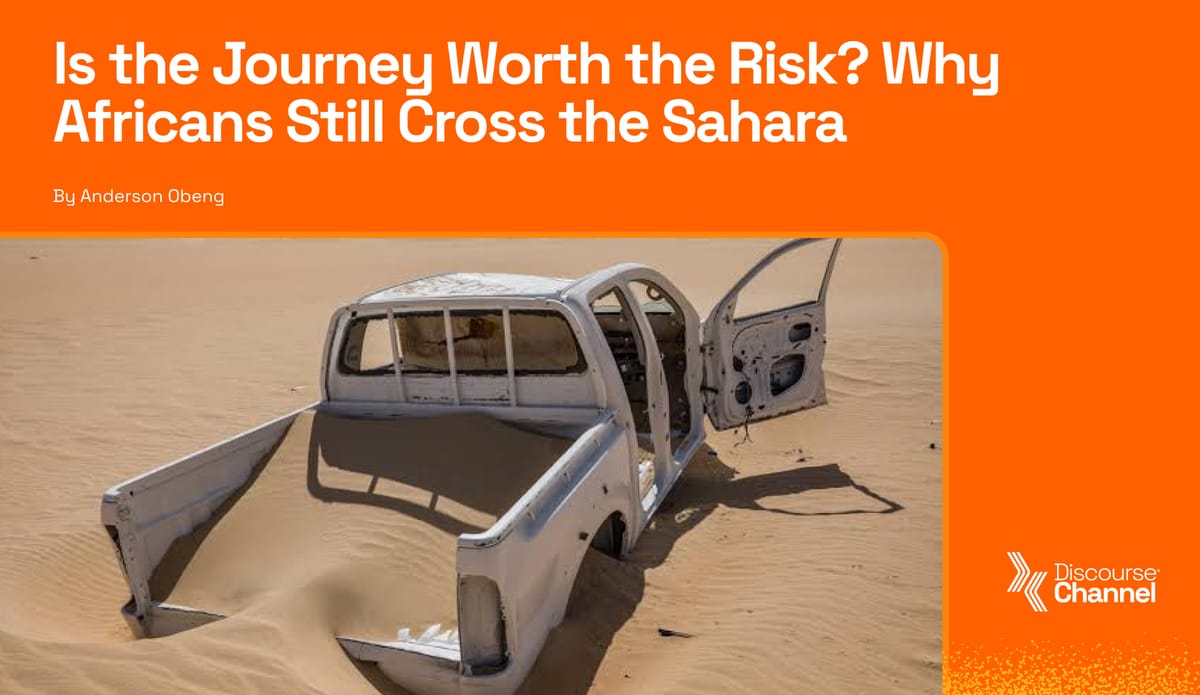
Forty-nine migrants have died in the Sahara Desert after their vehicle reportedly broke down between Mali and Niger, leaving them stranded in extreme heat without water and access to reach rescue services. The tragedy adds to a growing list of deaths along one of the world’s most dangerous migration corridors, where harsh conditions and vast distances over the sand dunes of the Sahara have turned movement across the desert into a life-threatening undertaking.
Yet the latest incident raises a difficult question that has persisted despite years of similar tragedies: why do people continue to embark on journeys when the dangers are well known and extensively documented?
The answer however, cannot be attributed to ignorance. For many migrants, the decision to leave is not impulsive, it is a calculated risk shaped by economic hardship, limited opportunities, environmental pressures, and the belief that remaining home offers fewer prospects than taking the risk of moving to greener pastures. In that sense, the Sahara is not the beginning of the story. It is the middle chapter of a much longer process that starts far from the desert itself.
Dreams Left in the Desert: Why People Leave
Migration is often discussed through the language of borders, security, and smuggling networks. But beneath these systems lies a more fundamental reality: most journeys begin with the pursuit of opportunity.
Across many African countries, young people face labour markets that struggle to absorb the growing number entering working age each year. While access to education has improved in several places, the availability of stable and formal employment has not expanded at the same pace. For many, work exists, but often in informal sectors characterised by low incomes and limited job security.
In such circumstances, migration becomes more than an individual ambition. It becomes a household strategy. Families may contribute resources to support one member’s journey abroad, hoping that success will eventually translate into remittances that help pay school fees, cover healthcare expenses, or improve living standards for them.
This collective effort places significant expectations on migrants even before they leave. The journey is rarely undertaken for personal reasons alone. It is tied to broader family aspirations and long-term economic survival.
At the same time, migration is driven by pressures that extend beyond unemployment. In several regions, conflict and insecurity have displaced communities and disrupted livelihoods. Environmental pressures, including drought, land degradation, and changing rainfall patterns, have also reduced the viability of traditional agricultural activities.
For communities dependent on farming and livestock, declining productivity can leave migration as one of the few available responses. Combined with rising living costs and limited access to alternative sources of income, these pressures make movement appear not simply attractive, but necessary.
There is also an aspirational dimension to migration. Stories of relatives and acquaintances who have succeeded abroad circulate widely through communities, reinforcing the belief that migration remains a pathway toward social mobility and economic advancement.
This does not mean migrants are unaware of the dangers. Rather, many weigh those dangers against circumstances they perceive as equally uncertain. For them, the choice is often not between safety and danger, but between limited opportunities at home and uncertain possibilities elsewhere.
The Sahara as a System
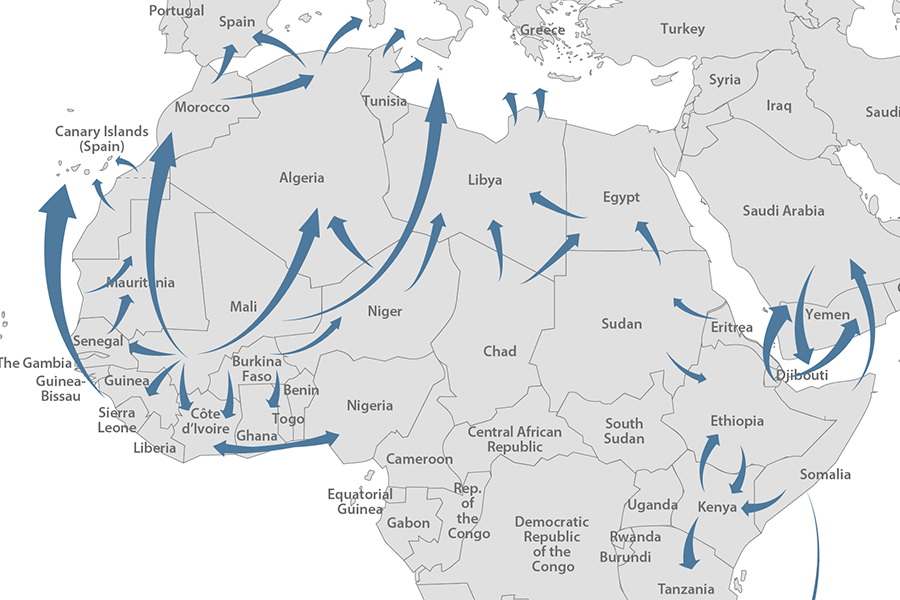
The deaths reported between Mali and Niger are not isolated events. They are part of a broader migration system that has evolved across the Sahel and North Africa over decades.
Countries such as Mali and Niger have historically served as important transit points connecting West and Central Africa to North Africa and, for some migrants, onward destinations in Europe. Over time, informal networks have developed to facilitate movement across borders, often operating beyond the reach of formal regulation.
These networks provide mobility where legal pathways are limited, but they also expose migrants to significant risks. Vehicle failures, abandonment, exploitation, and mis-navigation can quickly turn journeys into humanitarian emergencies, particularly in remote areas where communication infrastructure and rescue capabilities are limited.
The Sahara itself presents extraordinary challenges. Extreme temperatures, vast distances, and isolated terrain mean that even minor disruptions can become fatal.
Despite repeated tragedies, migration through the region has persisted. Routes have adapted in response to changing border policies and security measures. As certain pathways become more restricted, alternative routes often emerge, pushing migrants into increasingly isolated and dangerous areas.
This pattern highlights an important feature of migration systems: restrictions do not necessarily eliminate movement. More often, they reshape it.
As formal pathways become harder to access, migrants become more dependent on informal networks and less visible routes. In doing so, the risks associated with migration are redistributed rather than removed.
The recurring tragedies in the Sahara are therefore not anomalies. They are symptoms of a larger system that continues to function because the conditions driving migration remain largely unchanged.
The Limits of Control: When Policy Lags Behind Reality
Over the past decade, governments and international partners have intensified efforts to curb irregular migration through stronger border controls, surveillance, and anti-smuggling initiatives.
While these measures aim to reduce dangerous journeys, they have not eliminated migration pressures. Instead, they have often contributed to shifts in migration routes, producing journeys that are longer, more fragmented, and more hazardous.
At the same time, development programmes designed to address the root causes of migration have focused on job creation, education, and infrastructure. These efforts are widely recognised as essential, but they operate within a longer time frame than the pressures that shape migration decisions.
This creates a fundamental mismatch.
Migration decisions can be immediate, driven by household needs and economic pressures that require urgent responses. Economic transformation, however, unfolds over years and sometimes decades. As a result, policy frequently finds itself attempting to solve short-term pressures with long-term solutions.
The consequence is a persistent gap between the pace of migration and the pace of development.
The tragedy in the Sahara illustrates the limitations of relying solely on enforcement measures without addressing the structural realities that make migration attractive in the first place. Border controls and anti-smuggling operations remain important, but they cannot fully resolve pressures rooted in inequality, unemployment, demographic growth, and environmental vulnerability.
The challenge facing policymakers is therefore not simply how to prevent movement, but how to create conditions in which movement is less likely to be driven by desperation.
Why This Matters
The deaths in the Sahara represent more than the dangers of a single route. They expose a broader tension between aspiration and opportunity across a continent experiencing profound demographic and economic change.
Africa’s young population has the potential to become one of its greatest assets. But that potential depends on whether expanding aspirations are matched by expanding opportunities.
Migration itself is neither new nor inherently problematic. Movement has long been part of economic and social life. The challenge arises when opportunities at home fail to keep pace with expectations, pushing individuals toward increasingly dangerous pathways.
Ultimately, the story of the Sahara is not only about those who leave. It is also about the futures available to those who stay.
Until the gap between opportunity and aspiration narrows, dangerous migration routes are likely to remain a feature of the continent’s reality. And as long as that imbalance persists, tragedies in the desert may continue to repeat themselves, not because people are unaware of the risks, but because they believe the risks of staying are even greater.