Ghana’s Rent Dribble with Landlords
Despite being Illegal, it is entrenched in Ghanaian society. Ghana’s two-year advance rent system squeezes millions of urban renters into debt, exposing the failure of housing policy and rent enforcement.
Rosalyn Dery is a widow from the Upper West Region, Ghana; she has 2 children, and they moved to Accra for greener pastures. She counts her money again, knowing it will not be enough. She earns ¢1,000 ($100) a month, but her landlord wants ¢800 per month, paid two years in advance.
“I can’t even save for one year, let alone two,” she tells ADC. “How do they expect me to live?”
Rosalyn, a single mother in her early 30s, has moved three times in five years, each time pushed further from the city centre of Accra. Every move comes with the same demand: a lump sum equivalent to 24 months’ rent, often topping ¢19,000, before she is handed the keys.
Under Ghanaian law, such demands are illegal. The Rent Act of 1963 caps advance rent at six months for long-term tenancies. Landlords who flout the rule risk fines or up to two years in jail. Yet for decades, the law has existed largely on paper, overtaken by a market reality in which tenants have little bargaining power and housing supply lags far behind demand. For Rosalyn and millions like her, the result is a relentless rental trap.
A system that rewards landlords, punishes tenants
Across Accra, prospective tenants routinely face demands for two to five years of rent in advance. For a modest one-bedroom apartment priced at ¢1,000 a month, a two-year advance means producing ¢24,000 upfront – more than two years’ income for low-paid workers and a huge burden even for young professionals. For more than 60 years after Ghana passed its Rent Act, the country operated without a formally appointed rent commissioner. The rent control department existed, but enforcement was weak, disputes were informal, and oversight was inconsistent. That institutional vacuum allowed the advance-rent culture to harden into an unspoken rule.
Drabo Aboubacar is also an MBA student from Mali in Wisconsin. He pays 1200gh per month for his rent in advance. He is a graphic designer and earns 2000gh a month. Aboubacar complains about the pressure of paying a year’s rent in advance. He says he has had to rely on loans just to pay rent, and by the time he pays, he has little or nothing left for anything else. For Aboubacar, the cost of rent takes up a significant part of what he earns, leaving little room for savings and other basic needs.
Egali Sarbah is a national service personnel; he earns ¢715.50 per month and pays ¢800 per month for rent in Accra, Ghana. He needs to pay one year's advance. For Sarbah, his entire salary for the year would not even be enough to cover the rent in advance. Even if he manages to secure the money, he is left with no income to cover transportation to his workplace, not to talk of food and other basic needs.
Many borrow to survive. Some take high-interest loans. Others sell assets or rely on family remittances. The ‘rent-free’ period that follows is spent repaying debt rather than saving.“I had to take a loan just to get a place,” says another tenant, Josephine Mingle, who works in retail. “For two years I was paying the bank, not building a future.”
The pressure persists even as macroeconomic indicators improve. Ghana’s inflation rate fell to 3.8% in January, its lowest in years, but rents in Accra continue to rise – and rarely come down. Landlords adjust prices upward at renewal, often demanding another two-year advance at the new rate. Add agent fees – typically 10% of the total advance rent – and the costs spiral further.
“Meanwhile, landlords are using tenants’ money as interest-free capital.”
The system has reshaped Accra’s geography. Families are being pushed to peri-urban and developing areas where rent is slightly lower, but those areas come with poor roads, weak transport links, limited health facilities, and fewer schools. You save on rent and pay with time, safety and dignity.
You can pay rent for 10 years and still own nothing
Emmanuel Kporsu, a spokesperson for the department, insists the law is clear. “About the short tenancy, the law forbids any landlord from demanding more than one month’s rent,” he says. “If it comes to the long tenancy, the law forbids landlords from demanding more than six months’ rent in advance. We want to ensure the law is respected, and it will reflect in the new bill.” Yet tenants rarely report violations. Many fear eviction. Others doubt complaints will lead anywhere.
The state has tried before. Under former president Nana Akufo-Addo, the government launched a National Rental Assistance Housing Scheme, designed to pay advance rent on behalf of tenants and recover the money gradually through monthly salary deductions. The initiative offered relief to a few formal-sector workers but failed to shift the wider market, especially for the millions in informal employment.
A new sheriff, old habits
The recent appointment of Ghana’s first substantive rent commissioner has raised hopes of change. Appointed by President John Mahama, Frederick Opoku has promised tougher enforcement and a nationwide rent taskforce.
“This era of collecting rent anyhow is over,” said Opoku. “Rent administration in Ghana is regulated by law, and compliance is not optional.” He says the taskforce will work with local authorities to register tenancy agreements, monitor rentable properties and ensure taxes are paid on rental income. “It is an offence for a landlord to rent without issuing a tenancy agreement,” he says. “Tenants also commit an offence if they fail to demand one.”
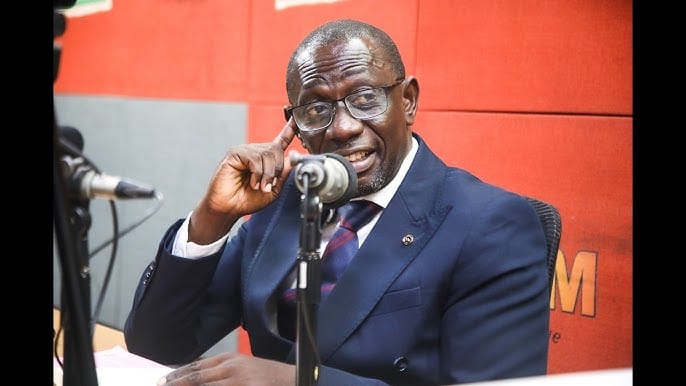
According to Opoku, about 60% of tenants nationwide have no formal tenancy agreements. “That must change,” he says. “We cannot protect people whose rights are undocumented.”
Why the trap persists
Despite the renewed push, analysts warn that enforcement alone will not fix Ghana’s rental crisis. Rapid urbanisation, population growth and years of underinvestment in affordable housing have left demand far outstripping supply. Public housing schemes have been sporadic. Private developers favour high-end apartments priced for expatriates and elites. For low-income earners like Rosalyn, options are vanishing. “The two-year advance rent system survives because tenants are desperate and housing is scarce.” “Until supply improves and enforcement becomes real, landlords will continue to dictate terms.”
For Rosalyn, policy debates feel distant. Her concern is immediate: finding reasonable rent without sinking deeper into debt. “I just want to pay month by month like other countries,” she says. “Is that too much to ask?”
As similar housing affordability crises and aggressive upfront landlord demands sweep across major urban centers throughout the African continent—from East to West Africa—millions of vulnerable renters find themselves trapped in cycles of debt. Until Ghana and the broader region bridge the gap between law and lived reality, renters everywhere will keep asking the same question while paying a price they can no longer afford.