Ghana’s Cultural Policy Reform Signals a Shift Toward Creative Economy Monetisation
The government of Ghana has finalized arrangements to roll out its updated National Cultural Policy framework, integrating the diaspora-focused “Beyond the Return” initiative into its broader cultural and creative economy strategy.
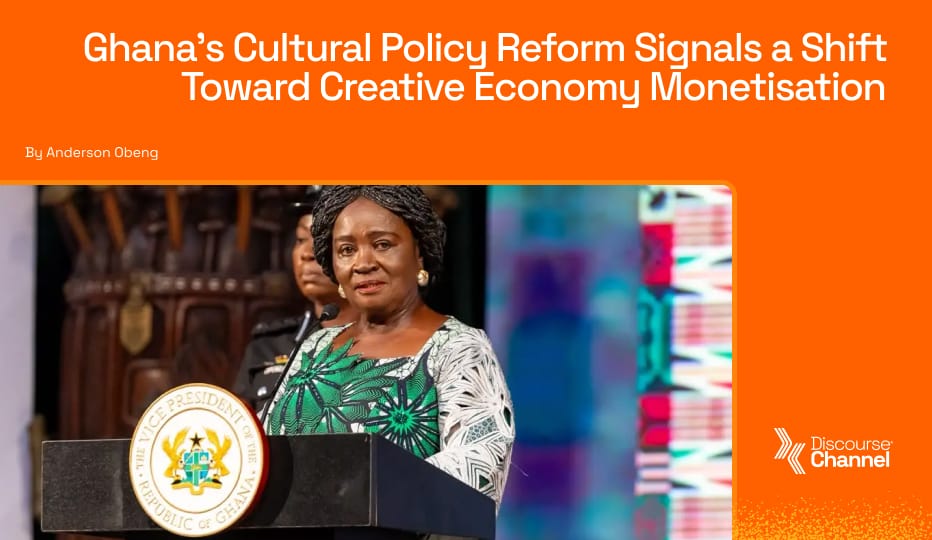
For years, Africa’s cultural policy frameworks have largely focused on heritage preservation and promotion. But a quieter shift is now underway, one that places monetisation, digital infrastructure, and diaspora participation at the center of cultural strategy. This week, Ghana signaled a major step in that direction with a new policy rollout that connects culture directly to creative economies and global markets.
The reform marks a shift in how cultural policy is being structured, moving beyond traditional preservation models toward systems that support monetisation, global collaboration, and cross-border creative production.
A key feature of the updated framework is its emphasis on enabling diaspora creatives to more easily build, finance, and monetise cultural and creative projects within West Africa. By formally embedding diaspora engagement into national policy, Ghana is positioning itself as a regional hub for cultural exchange and creative industry development.
The policy also reflects a broader recognition that culture is increasingly an economic asset rather than only a symbolic or heritage-driven sector. This includes growing interest in intellectual property frameworks, digital distribution systems, and infrastructure that supports scalable creative industries.
Across the continent, similar conversations are emerging around how African countries can retain greater value from their cultural exports while building systems that allow local and diaspora creators to participate more directly in revenue generation and ownership structures.
What we are watching:
- The Africa Soft Power Summit concluded its primary sessions with a framework calling for global streaming platforms to route distribution capital directly into African-owned entities.
- The Africa Technology Expo, launched in early 2026 in Lagos, highlighted a shift in Nigeria’s digital narrative from content creation toward infrastructure ownership.
Taken together, these developments point to a broader structural shift in Africa’s creative and digital economies.
Policy, technology, and media conversations are increasingly converging around ownership, infrastructure, and monetisation rather than visibility alone. Ghana’s cultural policy reform fits within this wider trend, where governments are beginning to treat culture not only as identity, but as a strategic economic sector tied to investment, digital systems, and global participation.