Accra Flooding Triggers Urgent Calls for Infrastructure Overhaul
Following severe flash floods on June 4th that led to structural collapses, disrupted markets, and triggered localized fires across parts of Accra, the Ghana Institution of Engineering (GhIE) issued a strong public directive calling for an immediate overhaul of the country’s infrastructure systems.
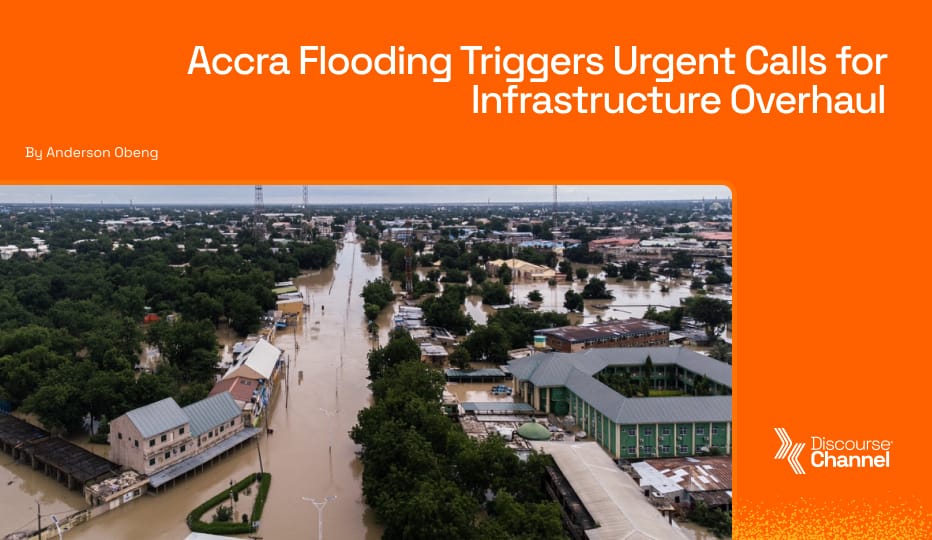
When cities fail to drain water fast enough, the damage is no longer just environmental, it becomes structural, economic, and social within hours. That reality was made visible again in Accra this week, where heavy flooding exposed long-standing weaknesses in urban infrastructure and triggered urgent calls for reform from engineering authorities.
Following severe flash floods on June 4th that led to structural collapses, disrupted markets, and triggered localized fires across parts of Accra, the Ghana Institution of Engineering (GhIE) issued a strong public directive calling for an immediate overhaul of the country’s infrastructure systems.
The institution warned that current urban planning and drainage capacity are no longer aligned with evolving climate realities, particularly the increasing frequency and intensity of extreme rainfall events. Their statement focused heavily on stormwater management failures, underscoring how inadequate drainage networks continue to amplify the impact of urban flooding.
The situation in Accra reflects a broader challenge across rapidly growing African cities, where urban expansion has often outpaced infrastructure development. Informal settlements, blocked drainage systems, and limited maintenance of existing stormwater channels have contributed to recurring flood risks during heavy rainfall periods.
Engineering experts are now urging a shift away from reactive infrastructure responses toward long-term climate-adaptive planning. This includes redesigning drainage systems, enforcing building codes in flood-prone zones, and integrating climate projections into national infrastructure development strategies.
The flooding also highlighted the cascading effects of urban climate shocks, where infrastructure failure quickly translates into economic disruption, particularly in market zones where trading activity is highly concentrated and structurally vulnerable.
What we are watching:
- Under the theme “Inspired by Nature. For Climate. For Our Future,” the United Nations and African development partners announced multi-million dollar agreements focused on urban green spaces and reforestation projects across climate-vulnerable regions in Sub-Saharan Africa.
- UNESCO announced new biosphere reserve designations across parts of Cameroon and Algeria, protecting ecologically sensitive landscapes from industrial expansion.
The events in Accra, alongside wider environmental developments across the continent, reflect a growing convergence between climate risk, urban planning, and infrastructure governance.
As extreme weather events become more frequent, African cities are increasingly being forced to confront the limitations of existing drainage, construction, and environmental systems. At the same time, international and continental conservation efforts are expanding, reinforcing the importance of balancing development with ecological protection.
Taken together, these developments signal a shift toward climate-aware infrastructure planning, where environmental realities are becoming central to how cities are designed, regulated, and maintained.