African Storytelling is Evolving Past Culture and Becoming an Economic Asset
The commercial value of a story does not necessarily end when the production is released. A successful film or series can generate value through broadcasting and streaming rights, licensing, merchandising, international distribution and adaptations.
A story can begin with a writer and end with a film on a screen. But the money it creates does not have to end there.
A major African production can bring together actors, writers, costume designers, technicians, caterers, transport operators, construction workers and many other businesses. If the story succeeds, it can also create opportunities in licensing, distribution, tourism, merchandise and future adaptations.
That makes African storytelling more than a question of culture or representation. It raises an economic question: who owns the story, and who captures the value it creates?
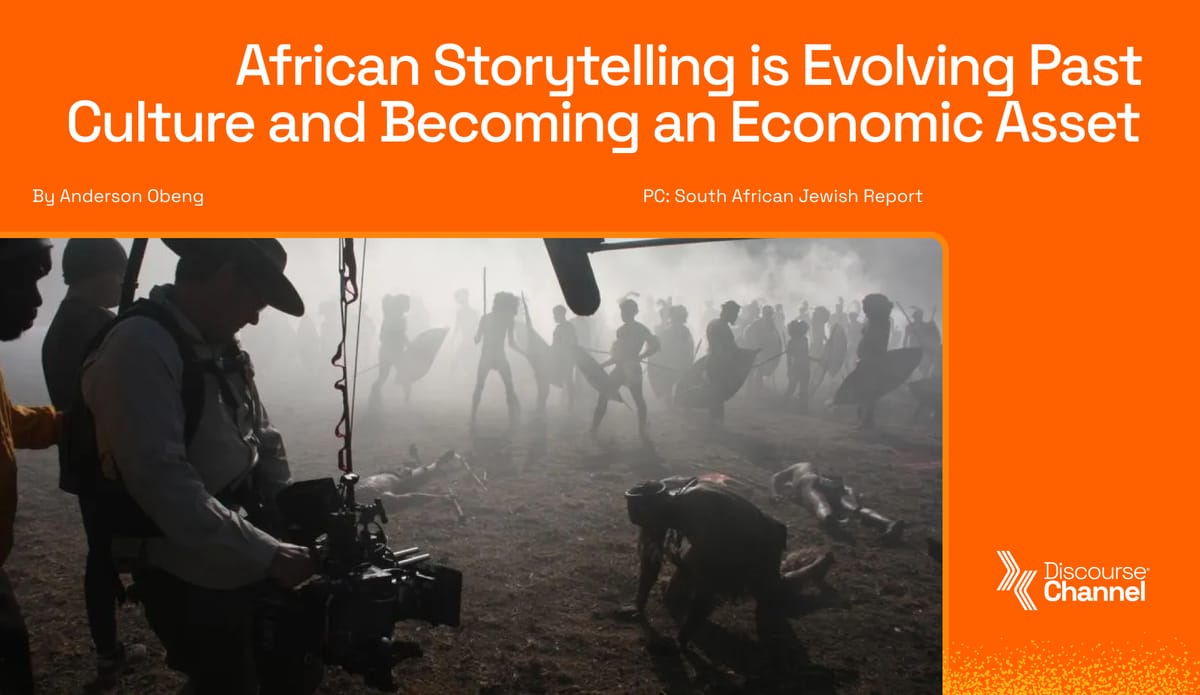
The scale of that opportunity can be seen in South Africa’s Shaka iLembe. The historical drama required thousands of contributors, including crew members, actors and extras, alongside extensive work in costumes, sets and production. News24 reported that the first season involved 9,150 contributors, while the production’s co-creator later said Season 1 created more than 8,000 jobs and Season 2 more than 16,000.
The figures should not be treated simply as a measure of the show’s profitability. But they demonstrate something important: a large African story can create an economic chain that extends far beyond what viewers see on screen.
From a Story to a Business
The commercial value of a story does not necessarily end when the production is released. A successful film or series can generate value through broadcasting and streaming rights, licensing, merchandising, international distribution and adaptations. A story may also create opportunities for tourism, publishing, music and other forms of creative work. This is where intellectual property becomes important.
Copyright and related rights give creators and rights holders mechanisms for controlling how creative works are used and for generating income from them. The World Intellectual Property Organization notes that creative businesses often rely on intellectual property to develop different income streams and that effective IP management can help creators retain control and secure revenue from their work.
In other words, the story itself can become an asset. The challenge is that creating an asset and owning an asset are not always the same thing. A writer may create the original idea. A producer may finance and develop it. A broadcaster or streaming platform may distribute it. Other companies may handle licensing, advertising or merchandising.
Each part of that chain can have a commercial interest in the final product. The agreements governing those relationships therefore matter.
The Ownership Question
The conversation about African creative industries often focuses on producing more content. But production is only one part of the equation. If African creators are to benefit from the growing demand for African stories, they also need the knowledge and systems required to manage the rights attached to their work.
This includes understanding copyright, licensing agreements, royalties, distribution rights, adaptation rights and the terms under which intellectual property is transferred or retained.
WIPO’s work on creative industries specifically identifies IP as a mechanism through which creative work can be commercialised, while its guidance for developing countries stresses the importance of helping creators retain control over their work and secure fair revenues.
That does not mean every creator should retain complete ownership of every project. Film and television productions require investment, distribution and partnerships, and those investors and partners can legitimately receive commercial rights. The more important issue is whether creators and local businesses understand what they are giving away, what they are retaining and how future uses of their work can generate additional value.
Why Production Scale Matters
The production required costumes, sets, accommodation, food, transportation and large numbers of people working both in front of and behind the camera. News24 reported that more than 2,000 costumes were made and that the production involved thousands of contributors. This is important because the creative economy is not limited to actors, musicians and filmmakers.
A production can create demand for suppliers, artisans, technicians, hospitality businesses, drivers, designers and other service providers. The larger the production ecosystem becomes, the more potential there is for money generated by entertainment to circulate through other parts of the economy.
But that effect should not automatically be described as permanent economic transformation. Jobs created for a production can be temporary, and the economic benefit depends on how much local businesses and workers participate in the value chain.
That distinction matters.
The goal should not simply be to celebrate large numbers. It should be to understand how creative projects can develop sustainable businesses and skills that remain useful after a production ends.
Digital Platforms Create Reach But Reach Is Not the Same as Revenue
Digital platforms have changed the potential audience for African stories. A production no longer has to depend entirely on a local television audience. Streaming and online distribution can take African films, series and other creative works to audiences across borders.
But a larger audience does not automatically mean that creators receive a larger share of the money generated by their work. The commercial structure behind a production still matters: who owns the rights, who distributes the content, how contracts are structured and how revenue is shared.
WIPO has similarly highlighted the need for African digital content industries to develop systems that support both distribution and the protection of intellectual property rights.
Building an Industry Around African Stories
The opportunity, therefore, is not just to produce more African stories. It is to build an industry around them.
That requires financing for creative projects, professional production infrastructure, stronger distribution networks, skilled workers and better understanding of intellectual property. It also requires investors and creators to treat creative work as something that can have long-term commercial value rather than as a product that makes money only at the point of release.
The value of a story can continue long after its first appearance.
A film can become a series. A series can lead to merchandise. A character can appear in another format. A historical story can generate interest in books, music or tourism. A successful intellectual property can potentially be licensed, adapted or distributed into new markets.
Not every story will achieve all of these things. But the possibility exists when the rights, investment and business structures are in place.
The Bigger Question
Africa does not have a shortage of stories. The more difficult challenge is turning those stories into sustainable economic opportunities while ensuring that the people and businesses that create them can participate in the value they generate.
Shaka iLembe offers one example of the scale a major African production can reach, particularly in employment and production activity. But the larger lesson is not simply that Africa should make more expensive films or television series.
It is that storytelling can sit inside a much wider economic system.
The next stage of Africa’s creative economy may therefore depend less on proving that African stories can attract audiences and more on building the structures that allow those stories to generate lasting commercial value.
The question is no longer only how many stories Africa can tell. It is how much value those stories can create and who gets to keep it.