Can $200 Million Reach the Farmers Who Need It?
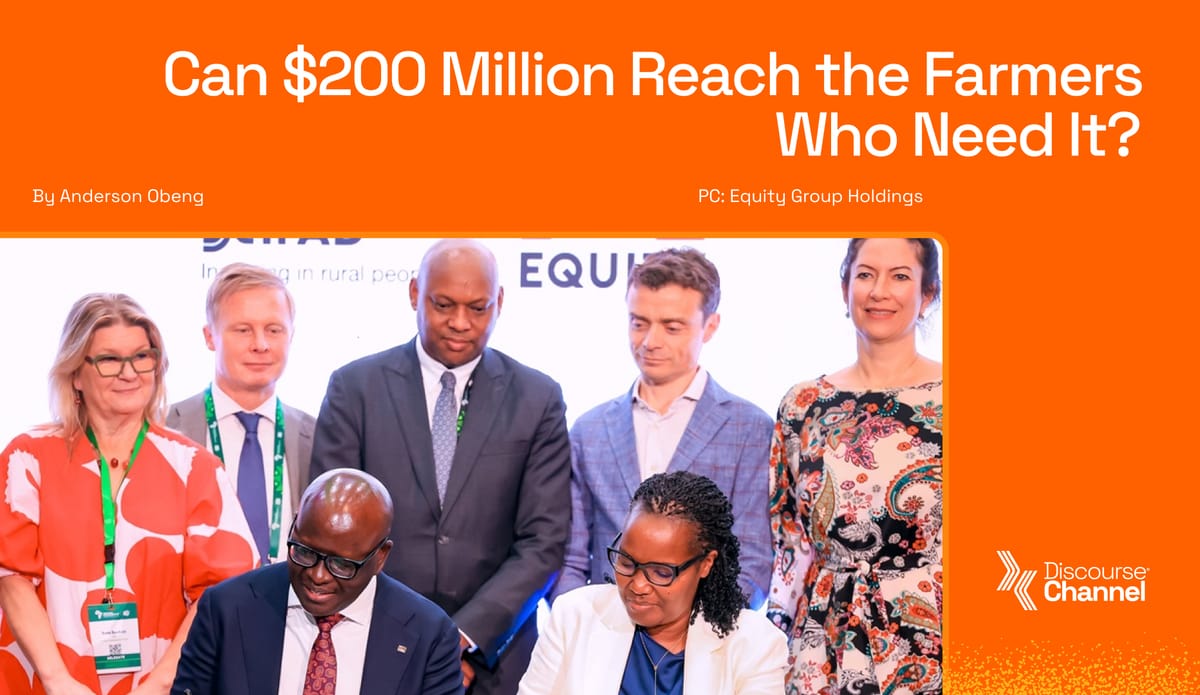
The International Fund for Agricultural Development (IFAD) and Equity Group have launched the Africa Rural Climate Adaptation Finance Mechanism (ARCAFIM), a 12-year initiative designed to expand access to climate-adaptation finance for smallholder farmers and rural businesses.
For a smallholder farmer, climate adaptation can sound like a distant policy idea. In practice, it can mean having water when the rains fail, keeping harvested food cold long enough to reach a market, or planting a crop variety that can survive changing weather conditions.
That is the gap a new $200 million financing mechanism is attempting to address across East Africa.
The International Fund for Agricultural Development (IFAD) and Equity Group have launched the Africa Rural Climate Adaptation Finance Mechanism (ARCAFIM), a 12-year initiative designed to expand access to climate-adaptation finance for smallholder farmers and rural businesses in Kenya, Uganda, Tanzania and Rwanda. It is expected to reach about 260,000 smallholder producers and 500 rural enterprises.
The programme is significant not simply because of its size, but because of how it is structured.
ARCAFIM combines lending with technical assistance. About $180 million will form the lending pool, while approximately $20 million will support technical assistance and related capacity-building. The lending capital is expected to revolve through several investment cycles, potentially generating about $266 million in loans over the life of the mechanism.
The bigger question is whether this model can make climate adaptation finance accessible to the farmers who have traditionally struggled to obtain it.
Climate Risk Is Already an Agricultural Financial Problem
For farmers, climate change is not simply an environmental issue.
Drought can reduce harvests. Erratic rainfall can disrupt planting seasons. Flooding can destroy crops and infrastructure. Higher temperatures can affect productivity and increase pressure on water resources.
These risks also create financial risks. A farmer who loses a harvest may struggle to repay a loan. A rural business that depends on agricultural supplies may face shortages. A processor can lose money when crops arrive late or deteriorate.
This is one reason climate adaptation can be difficult to finance through conventional lending. Banks need borrowers to repay their loans, while farmers are operating in an environment where weather can directly affect their income.
ARCAFIM is designed around that challenge by using blended finance and risk-sharing mechanisms to make lending to climate-vulnerable agricultural businesses more feasible.
What the Money Is Intended to Finance
The programme is not simply providing farmers with cash. It is designed to finance investments that can make agricultural businesses more resilient to climate shocks.
These can include irrigation, improved water management, climate-resilient agricultural practices, post-harvest infrastructure and other technologies that reduce exposure to weather-related losses. The mechanism also uses a climate-adaptation taxonomy intended to help participating financial institutions identify viable adaptation investments.
Cold storage is particularly important. When farmers produce more than local markets can immediately absorb, the ability to store perishable products can determine whether that harvest becomes income or waste. Irrigation addresses another vulnerability: dependence on increasingly unpredictable rainfall.
Resilient crop varieties can similarly reduce exposure to changing growing conditions, although their effectiveness will depend on whether farmers can access suitable varieties, inputs and technical support.
The important point is that adaptation is being treated as an investment in the productivity and resilience of the agricultural value chain.
Why Equity’s Role Matters
One of the more notable features of ARCAFIM is the participation of a commercial financial institution.
Equity Group is contributing $90 million from its own balance sheet, matching the concessional contribution from IFAD and other development partners.
That creates a different model from one in which climate adaptation depends entirely on donor-funded projects. The intention is to use concessional and risk-sharing capital to make investments that might otherwise appear too risky for conventional commercial lending more feasible.
The structure includes different layers of risk, with international financing partners taking first-loss and mezzanine positions while the bank carries senior risk. If the model works, it could demonstrate how development finance can help mobilise more private capital for agricultural adaptation.
That matters because the financing needs created by climate change are considerably larger than what development institutions can provide on their own.
Reaching Farmers Is Harder Than Raising Money
The size of the mechanism is significant, but the real test begins after the announcement. Climate finance has often struggled with the gap between money committed and money actually reaching vulnerable communities.
Smallholder farmers may lack formal financial records, collateral or sufficient credit histories. Rural businesses may operate far from bank branches and formal markets.
Even when financing is available, farmers may not know which adaptation investments will produce a reliable return.
That is why the technical-assistance component of ARCAFIM matters. The programme includes around $20 million for non-financial support, including expertise and training.
For adaptation finance to work, farmers need more than loans. They need to know how to invest that money in ways that reduce climate risk without creating unsustainable debt.
Women and Young Farmers
The initiative also has an inclusion target.
At least 50% of intended beneficiaries are expected to be women, while 30% are expected to be young people. That matters because access to agricultural finance is not evenly distributed.
But targets on paper are not the same as outcomes.
The eventual assessment will need to show how many women and young farmers actually received financing, what they invested in and whether those investments improved their resilience and incomes.
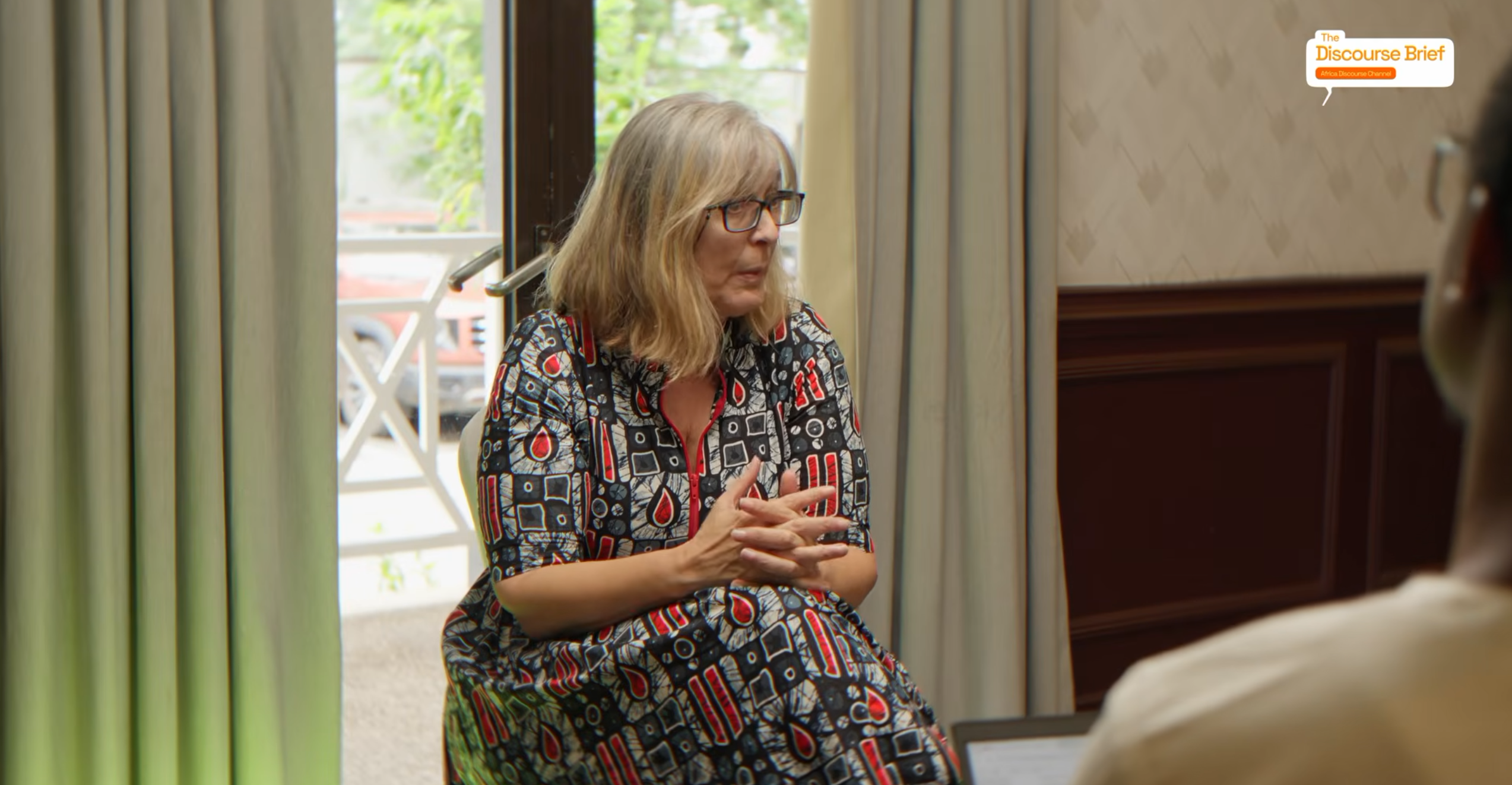
The Future of Education isn't the Classroom, Here's Why?
In this episode of Discourse Brief, we sit down with Professor Karen Ferreira-Meyers of the University of Eswatini's Institute of Distance Education at eLearning Africa 2026. She's spent over two decades building distance-learning infrastructure across Southern Africa; work that meant her institute was ready for COVID-19 fifteen years before it happened, while other universities scrambled for months.
A Model That Could Go Beyond East Africa
ARCAFIM is also being presented as a model that could potentially be replicated elsewhere in Africa.
That ambition makes the results particularly important. If the mechanism can demonstrate that blended finance can bring commercial banks into climate adaptation while reducing the risks associated with lending to small agricultural businesses, other regions could potentially adapt the approach.
But replication should depend on evidence rather than the size of the announcement.
The key measures will be practical ones: how much financing reaches farmers, how many businesses remain viable, whether climate-related losses decline, whether borrowers can repay sustainably and whether private financial institutions continue lending after concessional support is reduced.
The Real Test
East Africa does not simply need more climate finance. It needs climate finance that reaches the people making decisions on the ground.
For a farmer, resilience may not look like a large international financing mechanism. It may look like an irrigation system that keeps a crop alive, a cold room that prevents produce from spoiling or a crop variety that survives a difficult season.
That is why ARCAFIM’s success will ultimately be measured at the farm and rural-business level. The $200 million creates an opportunity. It does not guarantee an outcome.
The bigger question is whether this financing model can turn international climate capital into practical, affordable and sustainable investments that allow East Africa’s smallholder farmers to withstand the next climate shock.