The Rise of Green Agri-Tech in Africa
African agritech startups raised less than $170 million in 2025, down from more than $200 million in 2024, according to Briter’s State of Agtech Investment in Africa 2025.
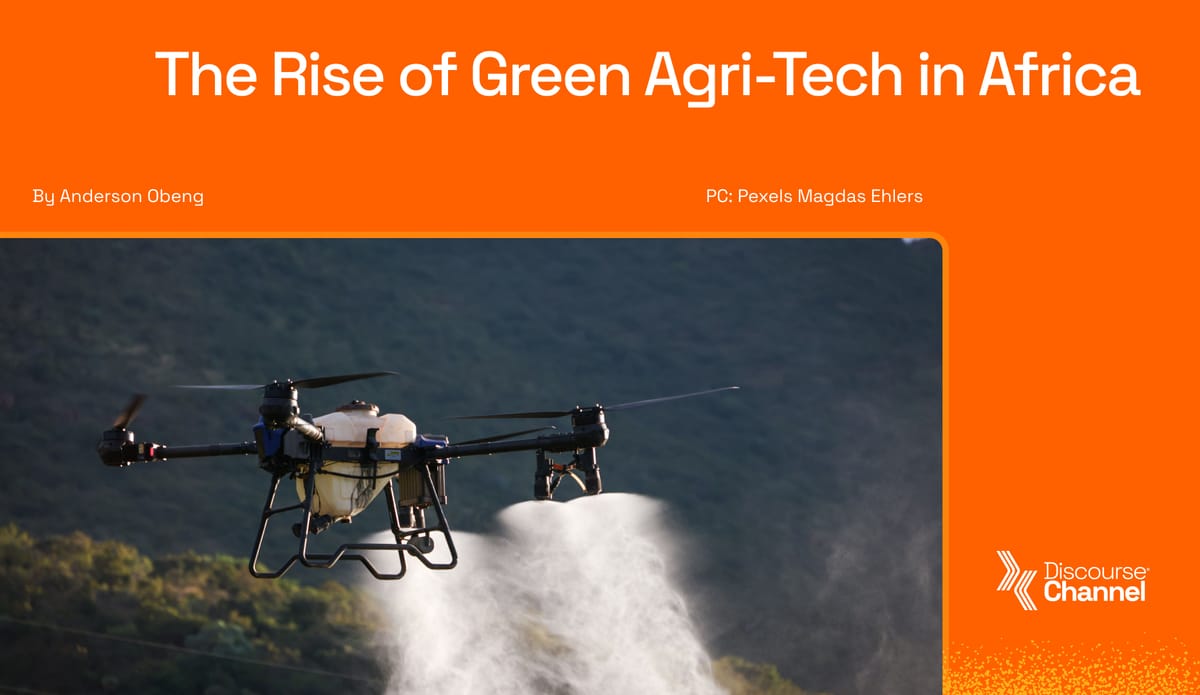
Africa’s agricultural technology story is moving beyond the farm. Instead of focusing only on helping farmers access markets, information or finance, investors are increasingly looking at what happens after crops are harvested: how they are processed, dried, stored and turned into higher-value products.
That is bringing attention to technologies such as solar drying, cleaner crop-processing systems and bio-based products that aim to reduce waste, lower energy costs and create new sources of value.
The shift comes against a more cautious funding environment. African agritech startups raised less than $170 million in 2025, down from more than $200 million in 2024, according to Briter’s State of Agtech Investment in Africa 2025. The number of deals also declined.
So the story is not that investors are suddenly pouring money into every part of African agriculture. It is that the problems investors choose to finance are becoming more specific.
From Farm Apps to Physical Infrastructure
Much of the earlier agritech boom centred on digital platforms connecting farmers with finance, markets, information and customers. Those services remain important. But agriculture’s biggest challenges are not always digital.
A farmer can produce a crop and still lose income because it spoils before reaching the market. A processor can have demand but struggle with high energy costs. Agricultural by-products can be discarded instead of being converted into useful materials.
This creates an opening for technologies that address the physical side of agriculture.
Solar-drying systems, for example, can provide an alternative to conventional drying methods. Cleaner processing equipment can improve efficiency, while businesses working with agricultural waste can turn materials such as husks and other by-products into inputs for new products.
The commercial opportunity comes from solving a cost or efficiency problem, not simply from being labelled “green.”
Where the Investment Case Comes From
For investors, environmental benefits alone are unlikely to be enough. A technology must also have a viable business model.
A solar-powered processing system could become attractive if it reduces operating costs. A company that converts agricultural waste into commercial products can potentially create revenue from materials that previously had little value.
This combination of environmental and commercial benefits is increasingly relevant to climate-focused investors.
For example, Acumen announced an additional $90 million in committed capital in July 2026 for its Resilient Agriculture Fund, targeting climate-resilient agribusinesses across Africa. The fund focuses on businesses working with smallholder farmers while building commercially viable agricultural enterprises.
Meanwhile, African agritech investment trackers show funding activity across areas such as agricultural processing, cold-chain infrastructure, solar technology and biodigesters. These investments point to a broader interest in the infrastructure surrounding agriculture rather than only the digital services used by farmers.
Turning Waste Into Value
Agricultural waste is another part of this emerging opportunity. Husks, shells, stalks and other crop by-products are often treated as waste, but some can be converted into products such as animal feed, energy or bio-based industrial materials.
For startups, this creates the possibility of earning from more than the primary crop. But the idea is easier than the execution.
Companies need reliable supplies of agricultural waste, suitable processing facilities, customers for the finished products and enough capital to scale. A technology that works in a pilot project still has to prove that it can operate consistently and profitably in real markets. That is where patient investment becomes important.

The Future of Education isn't the Classroom, Here's Why?In this episode of Discourse Brief, we sit down with Professor Karen Ferreira-Meyers of the University of Eswatini's Institute of Distance Education at eLearning Africa 2026. She's spent over two decades building distance-learning infrastructure across Southern Africa; work that meant her institute was ready for COVID-19 fifteen years before it happened, while other universities scrambled for months.
Agriculture Needs Different Kinds of Capital
Green agri-tech cannot rely on venture capital alone. Unlike many software businesses, agricultural technology companies often require physical equipment, warehouses, processing facilities and working capital. That can make their path to scale more capital-intensive.
Briter’s 2025 data showed that equity accounted for less than half of total African agtech funding, reflecting a growing role for other forms of finance.
Debt, grants, development finance and blended finance can therefore complement venture investment, particularly for businesses that need substantial physical infrastructure before they can generate returns. The right financing model will depend on the business and the stage at which it operates.
The Real Test Is Scale
The biggest challenge now is moving from promising technology to dependable business.
A solar dryer may work successfully in a pilot but face maintenance or distribution problems when deployed across several regions. A bio-based product may be technically viable but struggle to find enough customers willing to pay a profitable price.
African agricultural businesses also operate within supply chains affected by infrastructure gaps, weather conditions and fluctuating commodity prices. For investors, that makes due diligence and realistic growth plans particularly important. For founders, it means that a strong technology is only the beginning.
A More Focused Agricultural Investment Story
The current investment activity should therefore not be described as a blanket boom in African agritech. The funding environment remains challenging, but capital is still finding businesses addressing specific problems within agriculture.
The focus is increasingly extending into processing, energy, storage and waste areas that can determine how much value is retained after crops leave the farm. That could have wider implications for African food systems.
Producing more food matters, but so does reducing losses, improving processing and finding ways to extract more value from what is already being produced.
The Bigger Question
Green agri-tech is entering a more demanding investment environment. For startups, attracting attention will not be enough. Investors will want evidence that the technology solves a real problem, that customers will pay for it and that the business can grow beyond a small pilot.
For investors, the opportunity lies in identifying technologies that can deliver both commercial returns and practical improvements to agricultural systems.
The question, then, is no longer simply whether Africa needs more agricultural technology. It is which technologies can solve its agricultural problems well enough to become businesses that last.