Smallholder Farmers Gain Momentum in Market Access Push
Smallholder farming remains the backbone of food production across Africa, yet many producers still struggle to move beyond local markets into more stable, higher-value commercial supply chains.
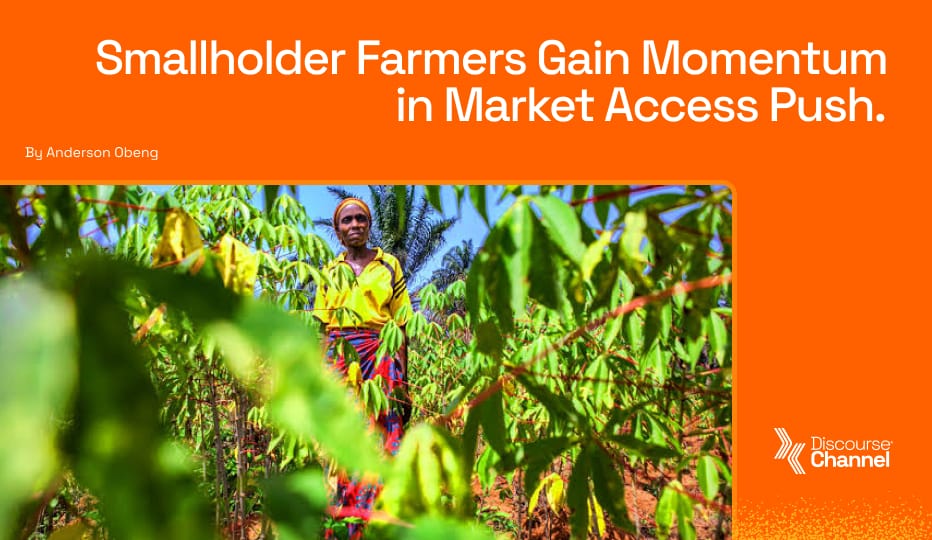
Smallholder farming remains the backbone of food production across Africa, yet many producers still struggle to move beyond local markets into more stable, higher-value commercial supply chains. This week, renewed attention and funding flowed toward addressing that gap, with a focus on strengthening market access and resilience across the agricultural sector.
The focus is on improving how small-scale producers who form the majority of Africa’s agricultural workforce can reliably access larger buyers, regional value chains, and structured agribusiness markets. These connections are increasingly viewed as essential for improving incomes, reducing post-harvest losses, and stabilizing food systems across the continent.
A key part of this shift involves investment in infrastructure and systems that enable efficient aggregation, logistics, and distribution. Digital platforms, cooperative networks, and climate-smart supply chain solutions are being explored as tools to bridge the gap between rural production zones and urban and export markets.
The push also reflects growing recognition that improving productivity alone is not enough. Without stronger market integration, smallholder farmers remain vulnerable to price volatility, limited bargaining power, and fragmented supply chains.
As a result, governments, development partners, and private investors are increasingly prioritizing programs that link agricultural production directly to demand-driven markets, while also strengthening resilience against climate and logistical disruptions.
What we are watching:
- The GoGettaz competition has opened applications for young innovators, offering a $160,000 prize pool to agrifood startups focused on building sustainable food systems across Africa.
- Food security initiatives and drone-enabled farming solutions gained attention this week as stakeholders focused on improving agricultural resilience and strengthening value-chain efficiency.
The direction of agricultural development is increasingly shifting from production-focused support to systems that prioritize connectivity, efficiency, and market integration. As smallholder farmers become more closely linked to structured commercial networks, the potential for stronger food systems and improved rural incomes continues to expand.