Traffic Congestion: A Solvable Problem in African Cities?
For many Africans, traffic has become so routine that it is accepted as part of everyday life. We joke about leaving home three hours early. Africa's growing cities need integrated transport strategies that combine reliable public transport, smart technology, stronger traffic law enforcement...
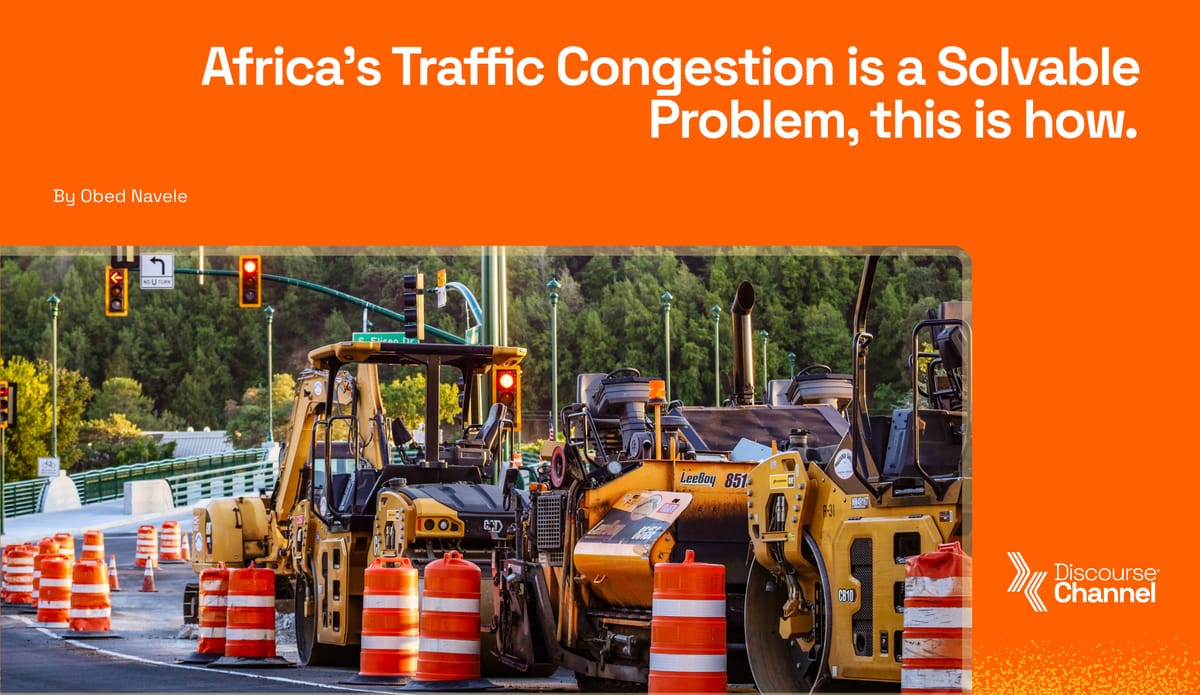
EDITOR'S NOTE; This article is part of a series exploring the structural issues shaping modern cities. While traffic congestion has become a daily frustration for millions of people, it is not an unavoidable consequence of urban growth. Around the world, cities have demonstrated that with the right planning, investment, technology, and political will, traffic can be significantly reduced. This edition asks a simple but important question: if cities around the world have found ways to reduce traffic congestion, what is stopping Africa from doing the same?
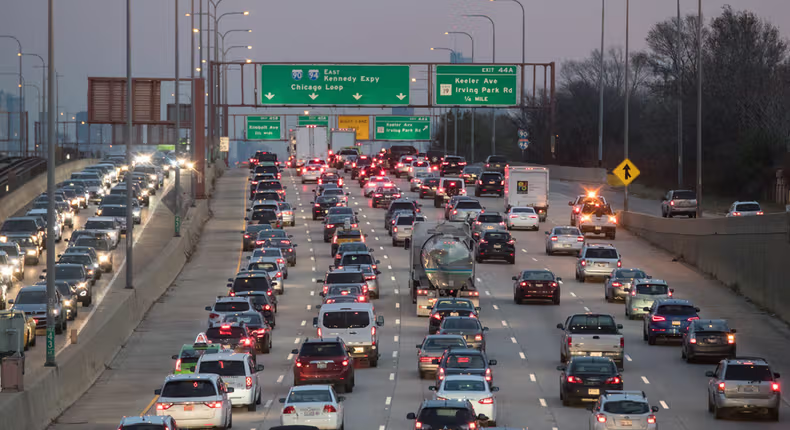
For many Africans, traffic has become so routine that it is accepted as part of everyday life. We joke about leaving home three hours early. We schedule meetings around rush hour. Ambulances crawl through endless queues. Businesses lose customers, workers lose productive hours, and families lose precious time together. It matters to make this distinction because talk about traffic is cheap. Every country with a congestion problem has, at some point, held a summit about it, written a transport master plan about it, or promised a new highway that will "finally solve" it. Africa is not short of good intentions on this subject. What is rare is the follow-through of the unglamorous work of actually building, funding and running something better, and sticking with it long enough for it to work.
Around the world, cities that once struggled with severe congestion have shown that traffic can be managed, not by building endless roads, but by changing how people move. Their experiences offer valuable lessons for rapidly growing African cities, Accra, Lagos, Nairobi, Kampala and Dar es Salaam.
Singapore: Making Congestion Expensive, Not Convenient
Few countries manage urban traffic as effectively as Singapore. By the 1970s, Singapore realised that building more roads could never keep pace with rising car ownership. Instead of encouraging more driving, the government decided to manage demand.
Today, drivers pay Electronic Road Pricing (ERP) charges when entering busy roads during peak periods. The busier the road, the higher the fee. At the same time, Singapore limits the number of new cars through its Certificate of Entitlement (COE) system, which requires motorists to purchase the right to own a vehicle for a fixed period. These measures are backed by one of the world's most efficient public transport systems, ensuring that people have a practical alternative to driving.
The lesson is clear: reducing traffic is not about punishing drivers. It is about making public transport so reliable that owning a car becomes a choice rather than a necessity. Many African cities continue to subsidise private vehicle use while underinvesting in buses and rail. Singapore demonstrates that effective transport policy begins by prioritising people over cars.
London and Stockholm: Paying for Congestion
In 2003, London introduced one of the world's first Congestion Charge schemes. Drivers entering central London during designated hours pay a daily fee. The policy immediately reduced traffic volumes and delays while generating revenue that was reinvested into buses, cycling infrastructure and public transport. Stockholm adopted a similar congestion tax after first testing it through a pilot programme. Public opinion shifted in favour of the policy once residents experienced shorter travel times and cleaner air.
These cities demonstrate an important principle: congestion pricing works best when commuters have affordable alternatives. Charging motorists without improving public transport simply shifts the burden onto citizens. African governments often hesitate to introduce road pricing because it may be unpopular. Yet London's experience shows that when revenues are transparently invested back into transport systems, public acceptance grows over time.
Bogotá: Solving Traffic Without Spending Billions
One of the biggest misconceptions about traffic is that only wealthy countries can solve it. Bogotá, Colombia, proved otherwise. Unable to afford an extensive underground metro system at the time, the city introduced TransMilenio, one of the world's most successful Bus Rapid Transit (BRT) systems. Dedicated bus lanes, prepaid stations and high-capacity buses allowed passengers to travel quickly without being delayed by ordinary traffic. Combined with extensive cycling lanes and the weekly "Ciclovía" programme, which closes many streets to cars and opens them to pedestrians and cyclists, Bogotá fundamentally changed how residents moved around the city.
The lesson for Africa is significant. BRT systems cost far less than metro rail while delivering many of the same benefits. Cities like Lagos have already demonstrated the potential of this approach, but greater investment, better maintenance and stronger integration are needed.
China: Let Artificial Intelligence Direct the Traffic
Technology is becoming one of the most powerful tools in traffic management. In Hangzhou, China, the City Brain platform uses artificial intelligence, cameras and real-time data to monitor traffic across the city. Instead of relying on fixed traffic-light schedules, the system adjusts signal timing automatically based on actual road conditions. Emergency vehicles receive priority routes, accidents are detected quickly, and traffic flow improves because decisions are made every second rather than every few months during manual reviews.
Many African cities already have CCTV cameras. The next step is not simply installing more cameras but connecting them into intelligent traffic management systems capable of making roads more responsive.
Japan: Build Cities Around Transport
Tokyo offers perhaps the world's greatest lesson in urban planning. Despite being one of the largest metropolitan areas on Earth, millions of people travel efficiently every day because public transport, not private cars forms the backbone of the city.
Rail stations are integrated with residential and commercial developments, making it possible for people to live, work and shop without relying on cars. Strict parking regulations also discourage unnecessary vehicle ownership. Rather than expanding highways indefinitely, Japan invested for decades in making trains the fastest, most reliable and most convenient option.
African cities should similarly plan future housing developments around transport corridors instead of allowing uncontrolled urban sprawl that forces residents into long daily commutes.
Rwanda: Leadership Matters
Africa already has examples worth studying. Kigali has earned recognition for disciplined urban management, cleaner roads and stronger enforcement of traffic regulations. While the city still faces transport challenges, consistent investment in road planning, organised public spaces and law enforcement has produced a more orderly transport environment than many cities of comparable size. The lesson is simple: infrastructure alone cannot solve traffic. Leadership, planning and enforcement are equally important.
Roads Alone Will Never End Traffic
One mistake governments repeatedly make is believing that wider roads automatically reduce congestion. Research consistently shows that expanding road capacity often attracts more vehicles, a phenomenon known as induced demand. Within a few years, the new roads become congested again because driving has become easier and more people choose to use private vehicles. Traffic is therefore not merely an engineering challenge. It is a behavioural and governance challenge.
Africa's Way Forward
No single country has discovered a magic solution. Singapore combined road pricing with excellent public transport. London paired congestion charging with reinvestment in buses. Bogotá prioritised affordable mass transit. China embraced artificial intelligence. Japan planned entire cities around rail. Rwanda demonstrated the value of disciplined governance.
The common thread is that none relied on one solution alone. Africa's growing cities need integrated transport strategies that combine reliable public transport, smart technology, stronger traffic law enforcement, better urban planning, safe walking and cycling infrastructure, and data-driven decision-making. These reforms require political courage, but the economic rewards are immense.
Every hour lost in traffic is an hour of productivity, education, healthcare, commerce and family life that can never be recovered. Traffic is often described as the price of development. It is not. Poor transport systems are the price of poor planning. Cities that choose to plan wisely choose prosperity. The rest simply choose longer queues.