African Union Reviews Education 5.0 Model for Continental Adoption
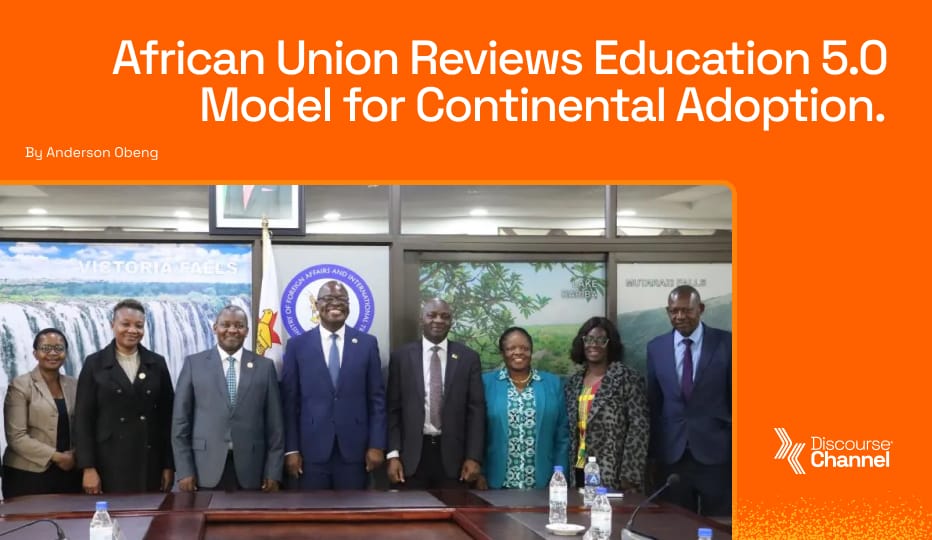
The African Union Commission concluded a high-level benchmarking mission focused on Zimbabwe’s Heritage-Based Education 5.0 Model, with the goal of exploring how similar reforms can be adapted and localized across other African education systems.
Education systems across Africa are increasingly being reassessed not just for access, but for relevance to local economies, culture, and development priorities. A major continental benchmarking exercise signaled a growing shift toward education models built from African contexts rather than imported frameworks.
The African Union Commission concluded a high-level benchmarking mission focused on Zimbabwe’s Heritage-Based Education 5.0 Model, with the goal of exploring how similar reforms can be adapted and localized across other African education systems.
The model, which emphasizes skills development, innovation, entrepreneurship, and cultural relevance, is being studied as part of a broader effort to align education with economic transformation goals. The mission reflects increasing interest in reshaping curricula to better support job creation, industrial development, and knowledge-based economies across the continent.
Rather than focusing solely on academic theory, the approach under review integrates practical skills and applied research, positioning education as a direct driver of national and regional development outcomes.
What we are watching:
- High-level diplomatic engagements, including the visit of Somaliland’s President to Israel, contributed to shifting regional relationships and evolving geopolitical alignments.
- The African Continental Free Trade Area (AfCFTA) remained a central focus for policymakers seeking to deepen intra-African trade and simplify cross-border movement of goods and services.
These developments point to a broader continental trend where education, diplomacy, and trade policy are increasingly interconnected. As African institutions explore locally grounded education models and strengthen regional integration frameworks, the focus is gradually shifting toward systems designed to support long-term economic transformation.