African Football Shines at the 2026 World Cup.
With a record 10 African nations qualifying for the expanded 48-team 2026 FIFA World Cup, media organizations are significantly increasing investment in African football content ahead of the tournament. Among the most notable developments is the expansion of localized programming and documentary...
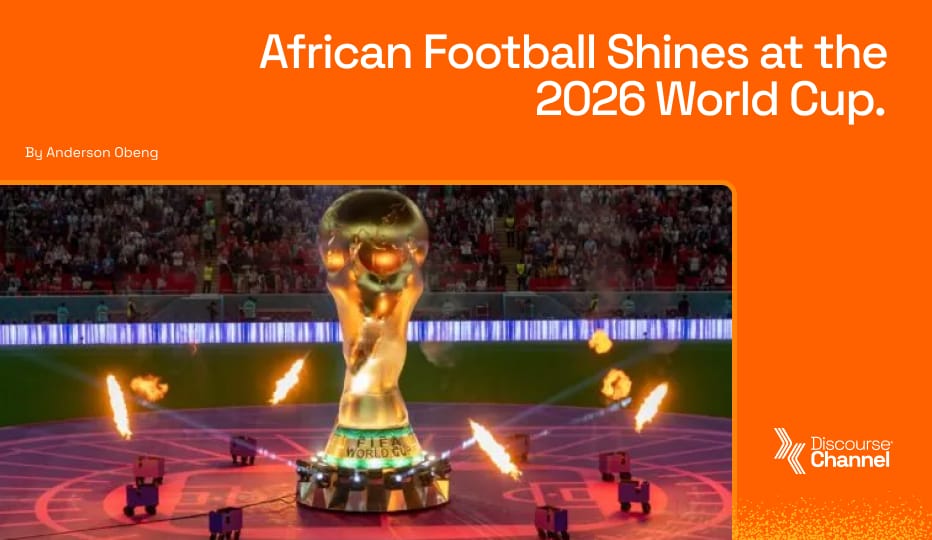
Across Africa, football is becoming more than a sporting spectacle, it is increasingly a driver of media investment, cultural influence, and global storytelling. As the continent prepares for its largest-ever representation at the FIFA World Cup, attention is shifting beyond the pitch to the narratives, creators, and industries growing around the game.
With a record 10 African nations qualifying for the expanded 48-team 2026 FIFA World Cup, media organizations are significantly increasing investment in African football content ahead of the tournament.
Among the most notable developments is the expansion of localized programming and documentary projects by BBC Sport Africa, reflecting growing global demand for African football stories, athletes, and cultural narratives. The focus extends beyond match coverage to in-depth storytelling that explores the journeys, identities, and social impact of the continent’s football icons.
The shift underscores a broader transformation in sports media. African football is increasingly being recognized not only as a competitive force but also as a valuable cultural and commercial asset capable of attracting global audiences, sponsorships, and streaming partnerships.
For Africa’s creative economy, the opportunity extends well beyond broadcasting. Documentary production, digital content creation, sports journalism, merchandising, tourism, and entertainment are all expected to benefit from the continent’s unprecedented World Cup representation. The tournament is becoming a platform through which African stories, talent, and culture can reach audiences on a global scale.
What we are watching:
- The rescheduling of the Women’s Africa Cup of Nations (WAFCON) to mid-2026 in Morocco has prompted adjustments to creative events, broadcast agreements, and entertainment marketing campaigns linked to the tournament.
- A new analytical report highlighted how creative technology hubs in Ghana are developing locally built AI tools to strengthen African ownership of music, film, and digital intellectual property while reducing dependence on foreign data systems.
The convergence of football, media, and technology reflects a wider evolution of Africa’s creative economy. As global interest in African sport continues to grow, success will increasingly depend not only on athletic performance but also on the continent’s ability to own, produce, and monetize the stories and intellectual property surrounding its talent.