Africa Health ExCon Spotlights AI, Diagnostics, and Health System Reform
Across Africa’s healthcare landscape, the gap between medical innovation and access remains one of the continent’s most persistent challenges. While new technologies are emerging rapidly, health systems are still under pressure to scale them effectively across both urban and rural populations.
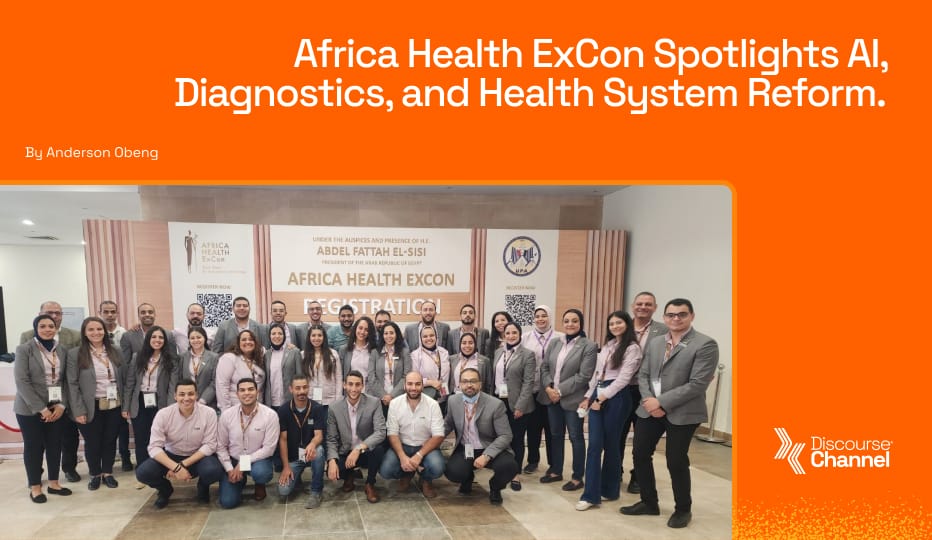
Across Africa’s healthcare landscape, the gap between medical innovation and access remains one of the continent’s most persistent challenges. While new technologies are emerging rapidly, health systems are still under pressure to scale them effectively across both urban and rural populations. This week, that conversation takes centre stage in Cairo.
The Africa Health ExCon has officially opened in Cairo, bringing together policymakers, healthcare leaders, researchers, and technology innovators to discuss the future of health systems across the continent.
A major focus of this year’s discussions is how emerging technologies, particularly artificial intelligence and digital diagnostics can be deployed to address long-standing healthcare gaps. The event reflects a growing shift toward data-driven, technology-enabled healthcare systems designed to improve early detection, diagnosis, and patient outcomes.
A key development highlighted alongside the summit is a $5.2 million funding round for AI Diagnostics, a health-tech initiative developing a smart stethoscope designed to improve tuberculosis detection. The innovation reflects growing investor confidence in AI-enabled diagnostic tools that can be deployed at scale in resource-constrained environments.
At the same time, the Africa Centres for Disease Control and Prevention (Africa CDC) has warned that the continent could be leaving an estimated $668 billion in economic value unrealized due to inefficiencies in health systems, limited access to care, and preventable disease burdens. The figure underscores the broader economic implications of healthcare gaps, extending beyond public health into productivity and long-term development outcomes.
What we are watching:
- The $5.2 million investment into AI-powered tuberculosis detection tools signals growing momentum behind AI-driven healthcare solutions aimed at improving early diagnosis and reducing diagnostic delays.
- The Africa CDC highlighted that inefficient health systems are costing the continent hundreds of billions in lost productivity and economic potential, reinforcing calls for accelerated health system reform and investment.
The convergence of high-level policy dialogue in Cairo, new health-tech funding, and stark economic assessments points to a healthcare sector in transition. Across Africa, the focus is increasingly shifting toward scalable, technology-enabled systems capable of closing long-standing gaps in access, diagnosis, and treatment.